
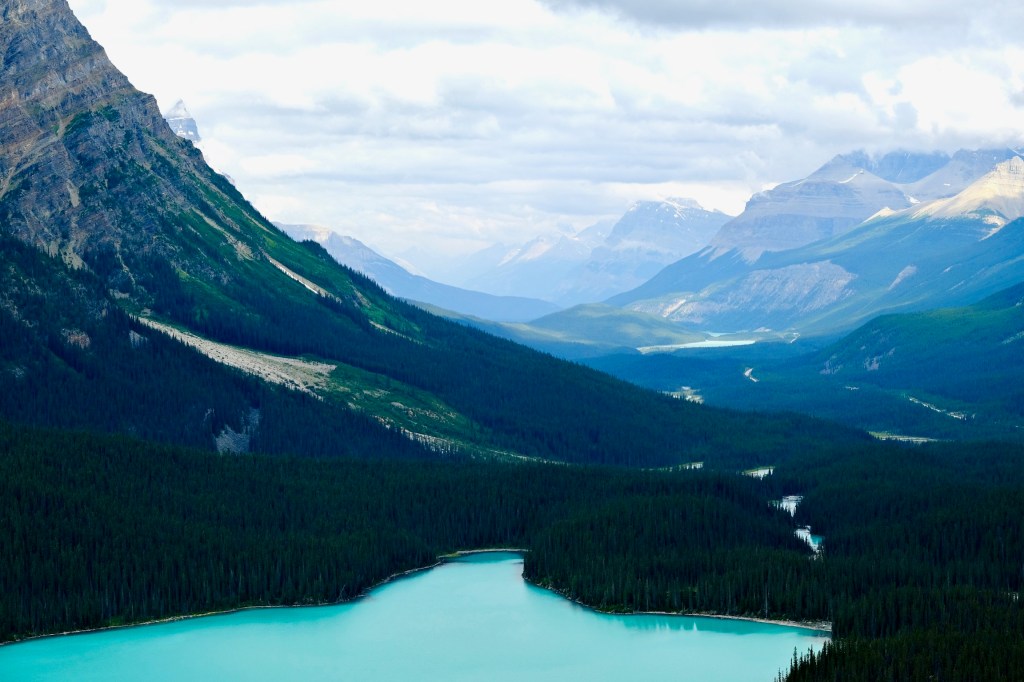
Sea to Sky and Shifting Scenery
The drive as we left Vancouver along the Sea to Sky Road treated us to a smorgasbord of landscapes — towering mountains, serene lakes, rushing rivers, and even a stretch of desert.
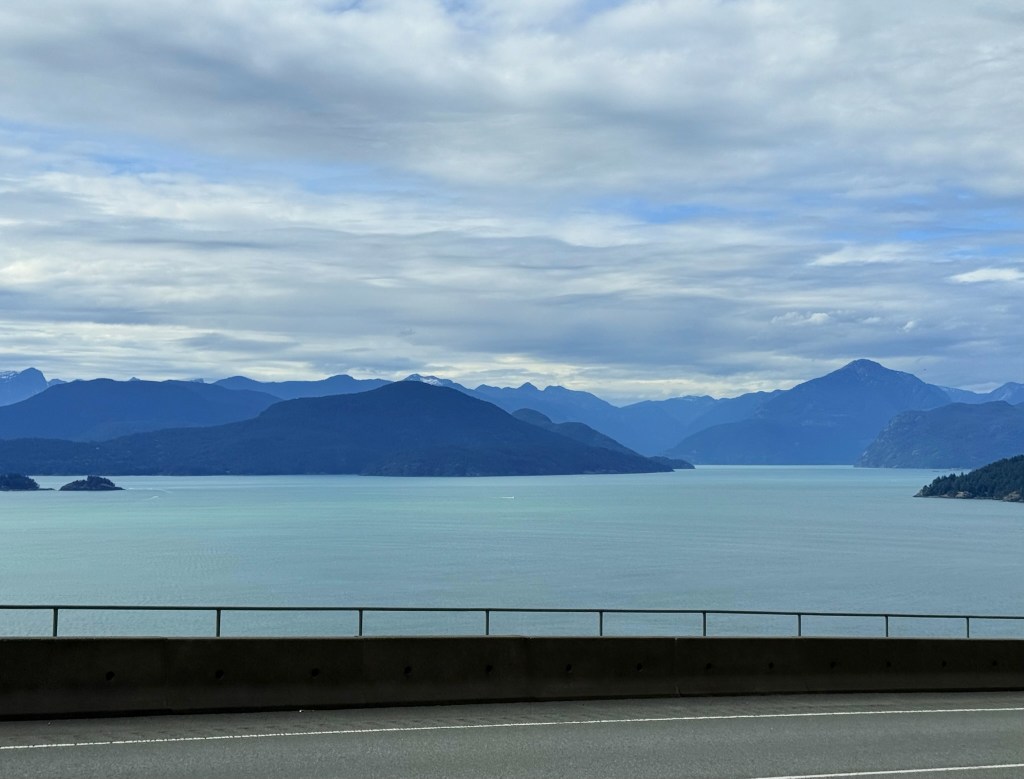
The heat in that section was intense, only to be replaced by Alpine coolness as we wound our way back into forests and turquoise lakes. Cycling seems to be the national pastime around here. Everywhere we go, there are cyclists — and plenty of dedicated cycle lanes (or at least generous hard shoulders that work as cycle lanes). We’ve also noticed a lot of BMW Mini cars on the roads. Clearly, this is a place where people love the outdoors… and perhaps compact parking. The Sea to Sky road ends at Whistler, which we found highly polished and very manufactured. Of course, this is likely to be as a consequence of the Winter Olympics, in 2010.
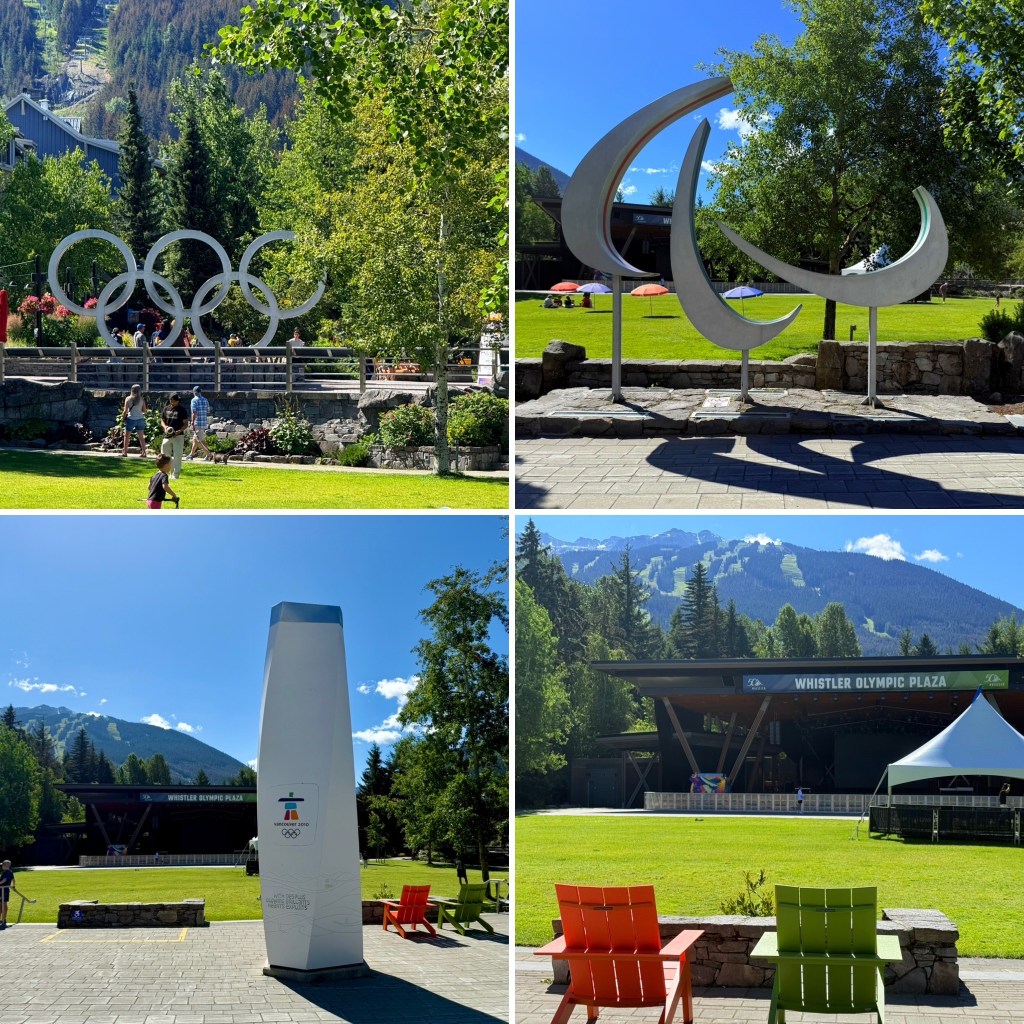
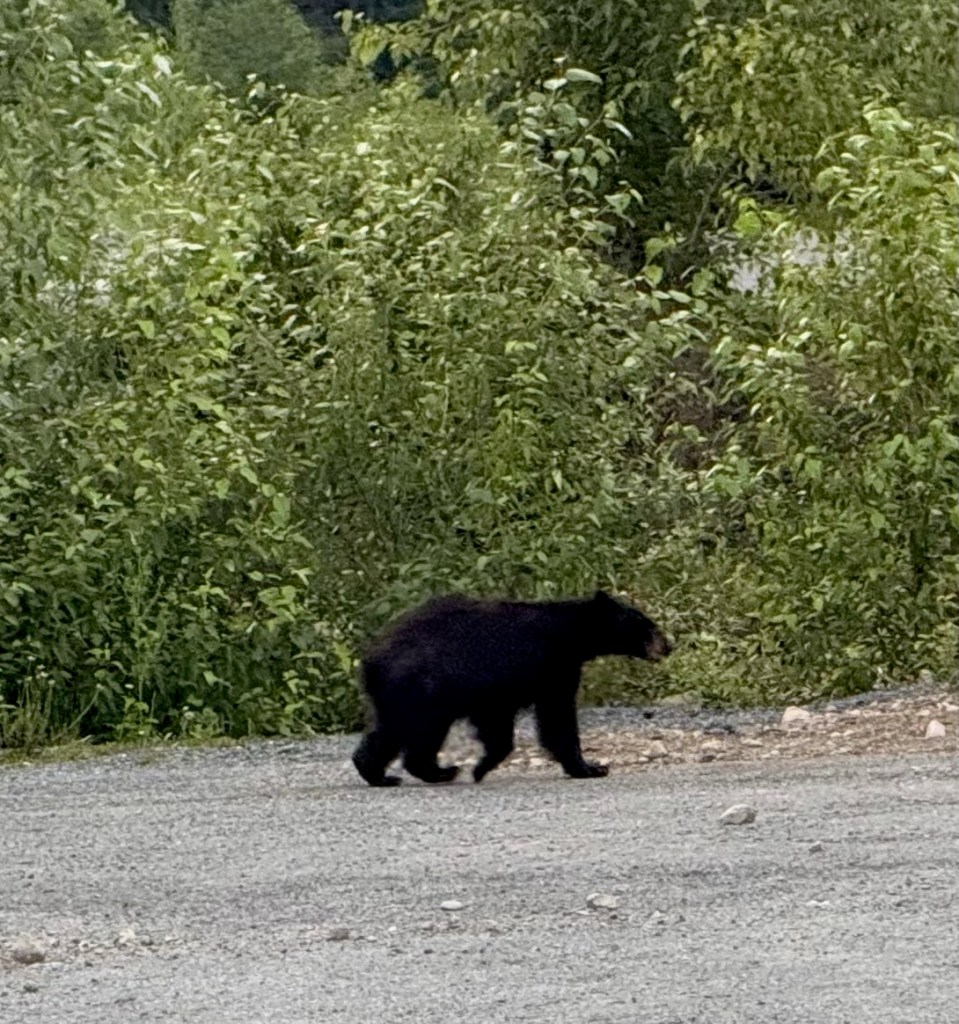
Again lots of cyclists, mainly mountain bikers; it looks like there is some serious down hilling here, not exactly our style, old bones don’t heal very quickly! We did find somewhere nice and quiet to boon dock, just outside Whistler, and here we were treated to the sight of 3 bears, sauntering through the large car park!
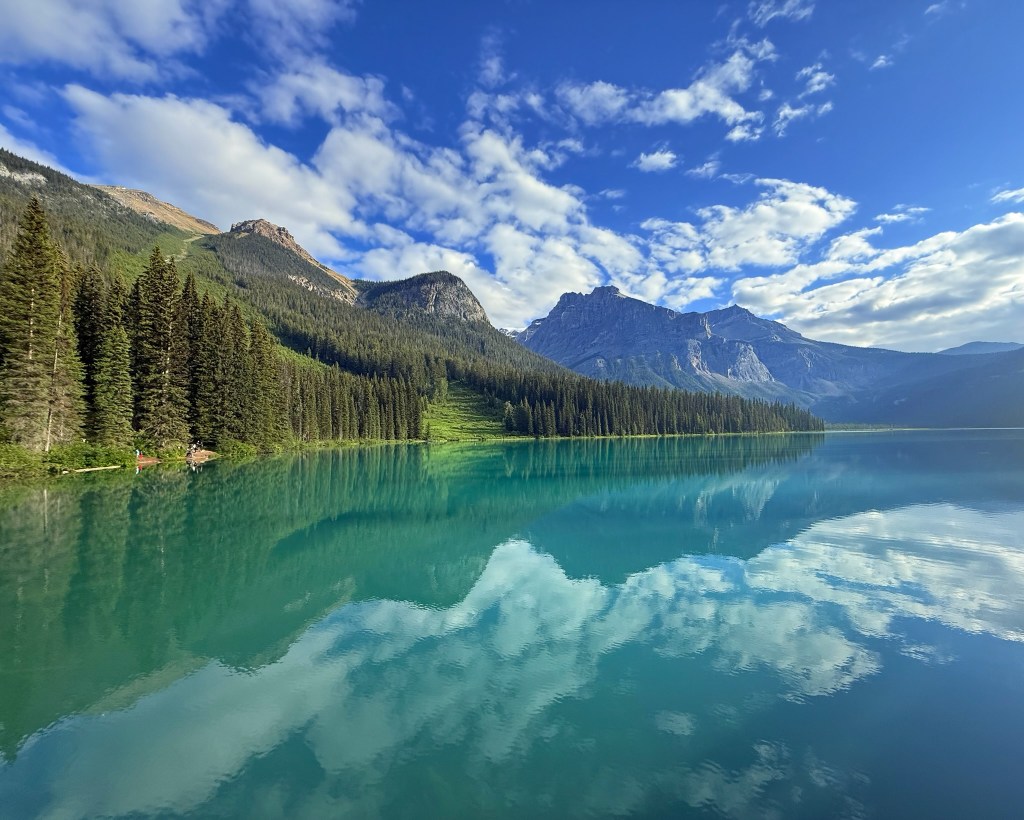
After leaving Whistler, we headed to Yoho National Park, where we had been told there was a beautiful lake, Emerald Lake.
We could see on Google maps it had a small car park, so once again we got up early to make sure we got a parking spot, and it worked. We set off for a lovely walk around the lake and up towards the source of the lake, a lovely steep valley. The lake is stunning, and yes, it is emerald green! When we got back to the car park we were really glad we had got there early, the number of vehicles was phenomenal and there were people everywhere! Onwards to Banff National Park.
Banff and Jasper National Parks
In summary, they are beautiful, but busy!
Banff and Jasper are two separate national parks in the Canadian Rockies. While they’re undeniably stunning, they’re also the busiest parks we’ve visited— and by now, we’ve seen quite a few . Compared to the US parks we had explored out of peak season, this was “off-the-charts” busy. People seemed so intent on ticking off their must-see spots that courtesy sometimes went out the window.
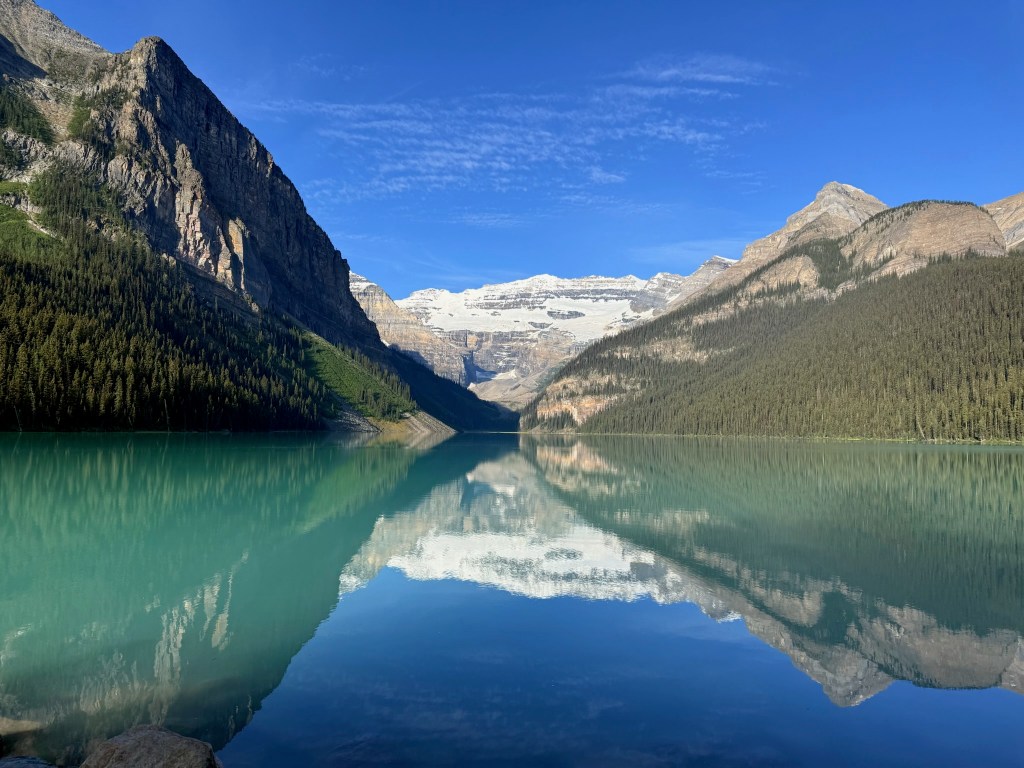
Our next stop was Banff National Park which is where the beautiful Lake Louise is, which had been near the top of our bucket list. Private cars can go up to lake Louise, but parking is limited and we didn’t fancy taking Shaun up there, so once again the e-bikes came into their own. We drove from our overflow car park where parking overnight is allowed, for $17,; paying to park in a scruffy car park essentially, with no services! There is an official campground but to get a spot, you have to book 6 months in advance, and we can’t plan that far in advance. We parked where the park and ride into Lake Louise goes from and at 7 am cycled up to Lake Louise; it was very cold at that time of day! We had intended to go to Moraine lake first to see the sunrise, but missed the turning, doh! Even at 8 am there were many people about the area; there was even two people having their wedding photographs taken with the lake as a beautiful back drop. The Fairmont Chateau, a hotel on the bank of the lake, looks spectacular in photos, was less impressive close up. Lake Louise is beautiful, framed by snow capped mountains on three sides, and in retrospect, I wish we had taken time to do one of the walks which got you away from the crowds, up and above it, to truly appreciate it.
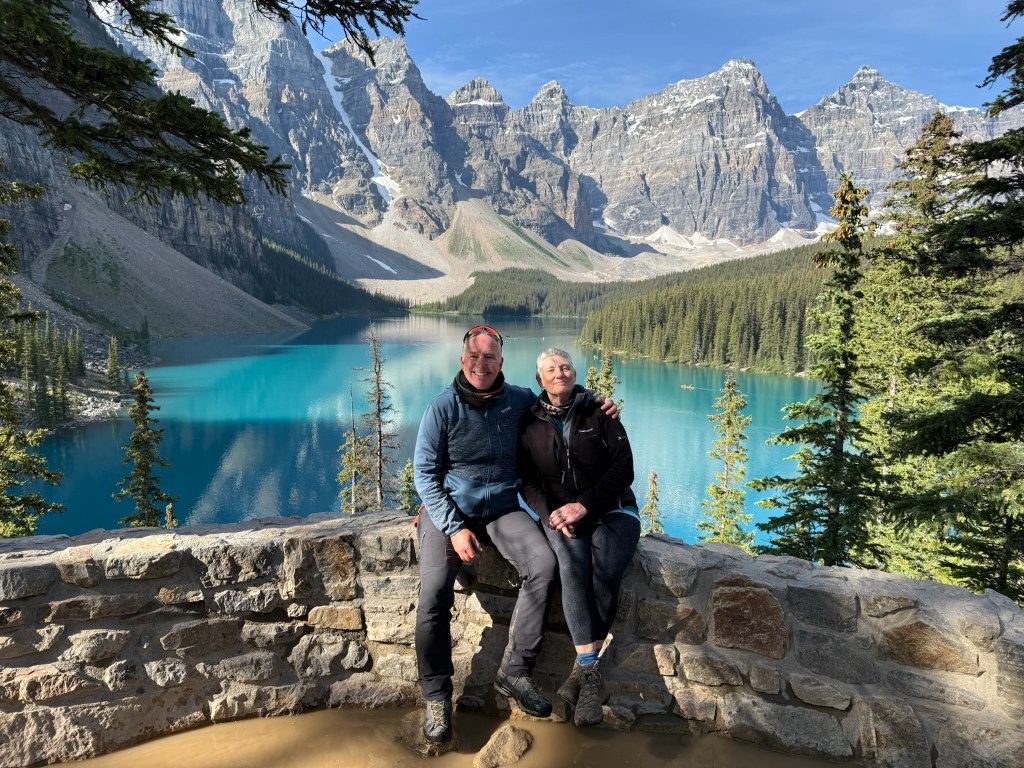
We then cycled to Moraine Lake. We had been warned we were taking our life in our hands, it was a small narrow road with lots of shuttle buses and coaches along it, as private cars are not allowed to go there. Well, we were pleasantly surprised how quiet the road was, and with plenty of passing room for the coaches. At Moraine Lake there is a viewpoint called the Rockpile Trail, very short, but gives a beautiful view down the lake and its surrounding mountains, called the Valley of the Ten Peaks. We shuffled up the trail, behind many other people, and enjoyed stunning the view. We went for a stroll along the lakeside to enjoy more good views. We could have rented a canoe to paddle on the beautiful turquoise waters, but decided the queue was too long! Moraine lake was our favourite of the two, and we can imagine in the evening it would be quiet due to the limited access.
Icefields Parkway
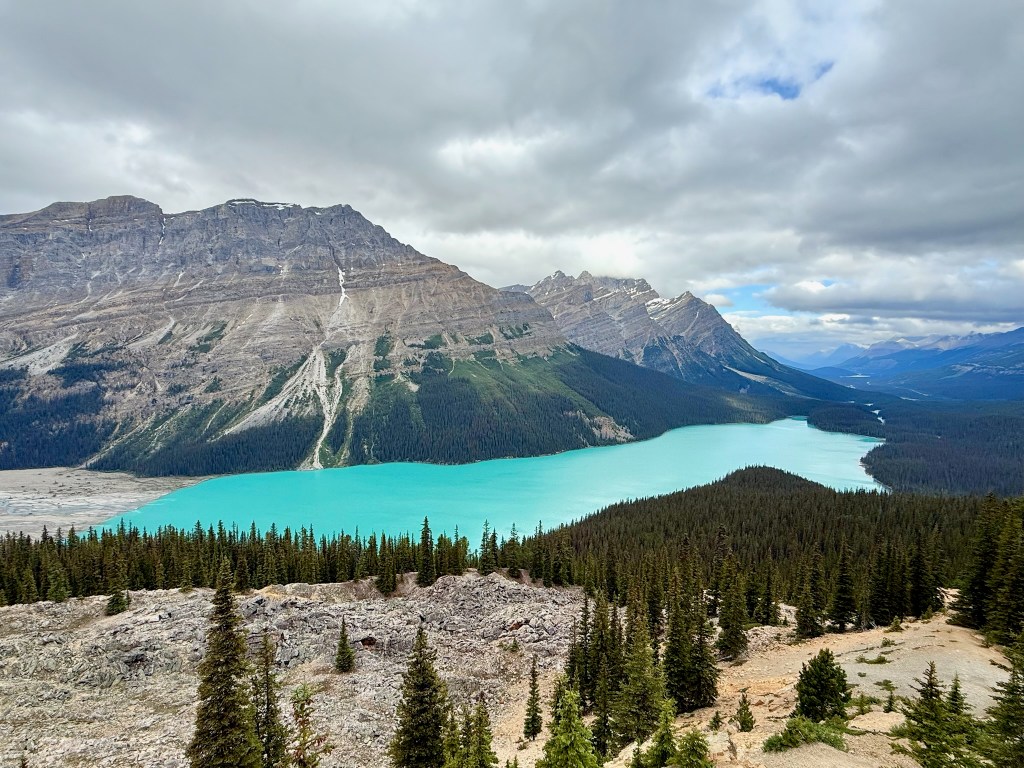
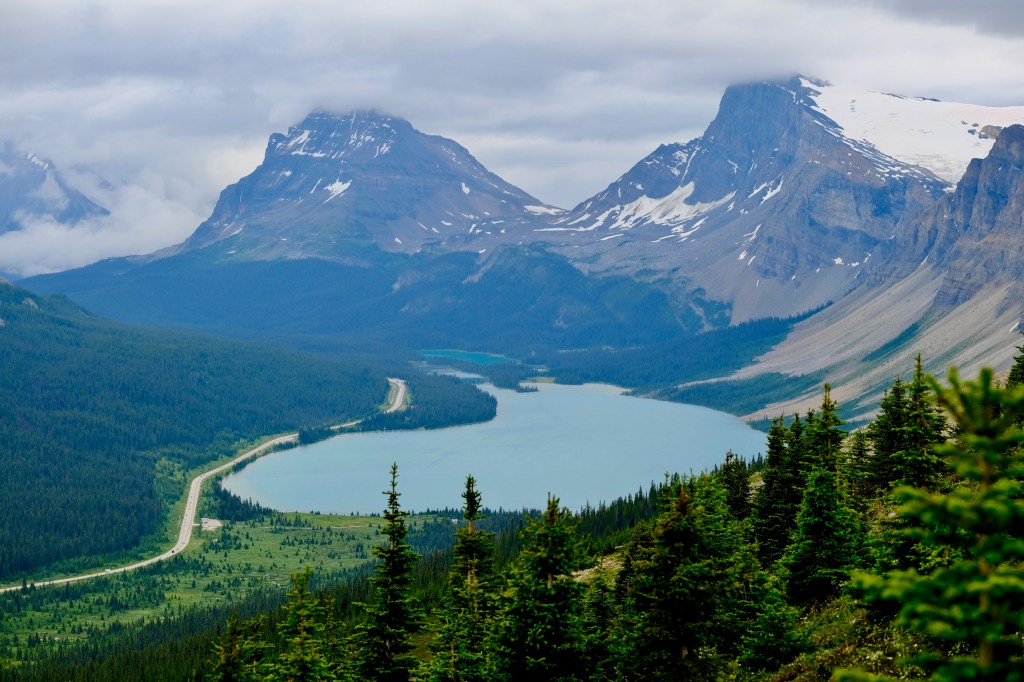
We got back to Shaun and on the road and started the drive along the Icefields Parkway, a famous and scenic 144 mile road between Lake Louise and Jasper. As we drove we passed glacial blue lakes and views of mountains and glaciers. We had managed to get into an official campground with Parks Canada for a night, Silverhorn Creek, and it was delightful, big and open, with great views. The next day, before we drove onto Columbia Icefield we did a walk at Peyto Lake, another stunning coloured lake and walked up to get a view of Bow Lake, beautiful colours all due to glacial melt.
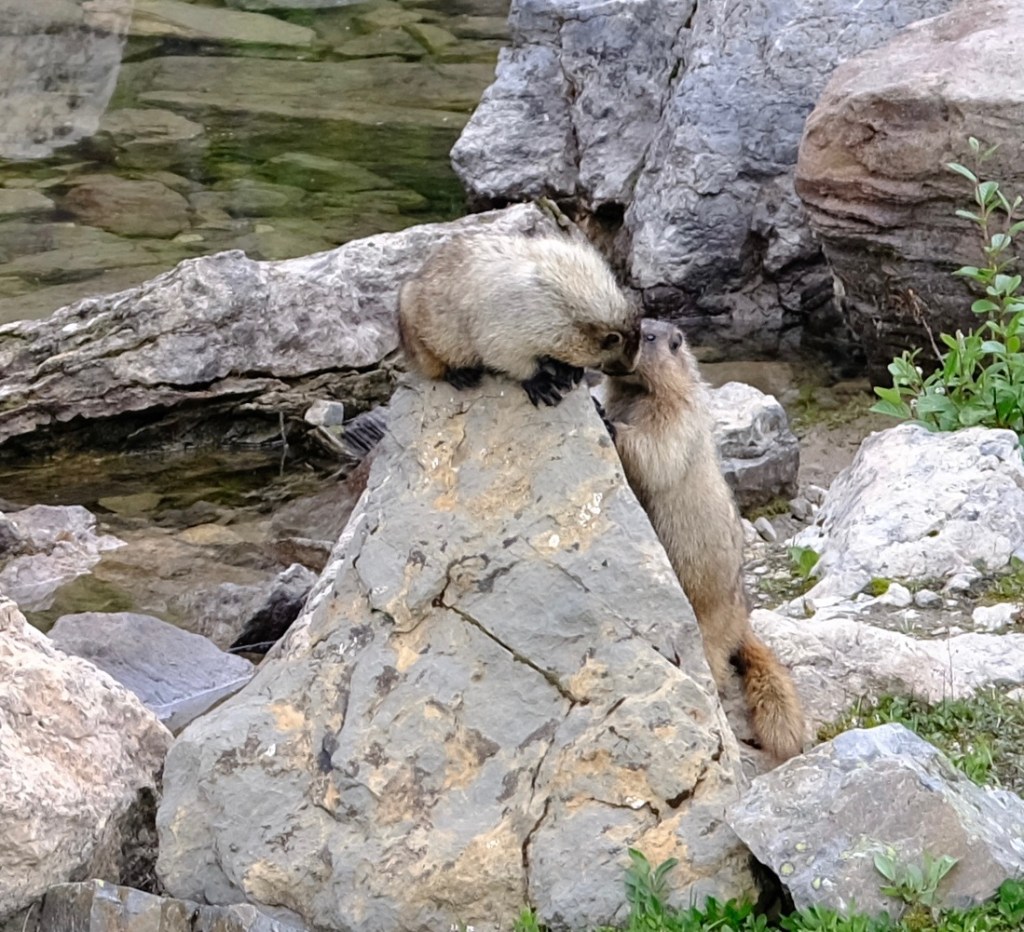
As we were walking back down from the view point, we came across a group of marmots, worryingly they did not seem bothered by humans being around. However, this did give us an opportunity to stand and watch them for about 10 minutes, eating and playing, a lovely moment.
Columbia Icefield
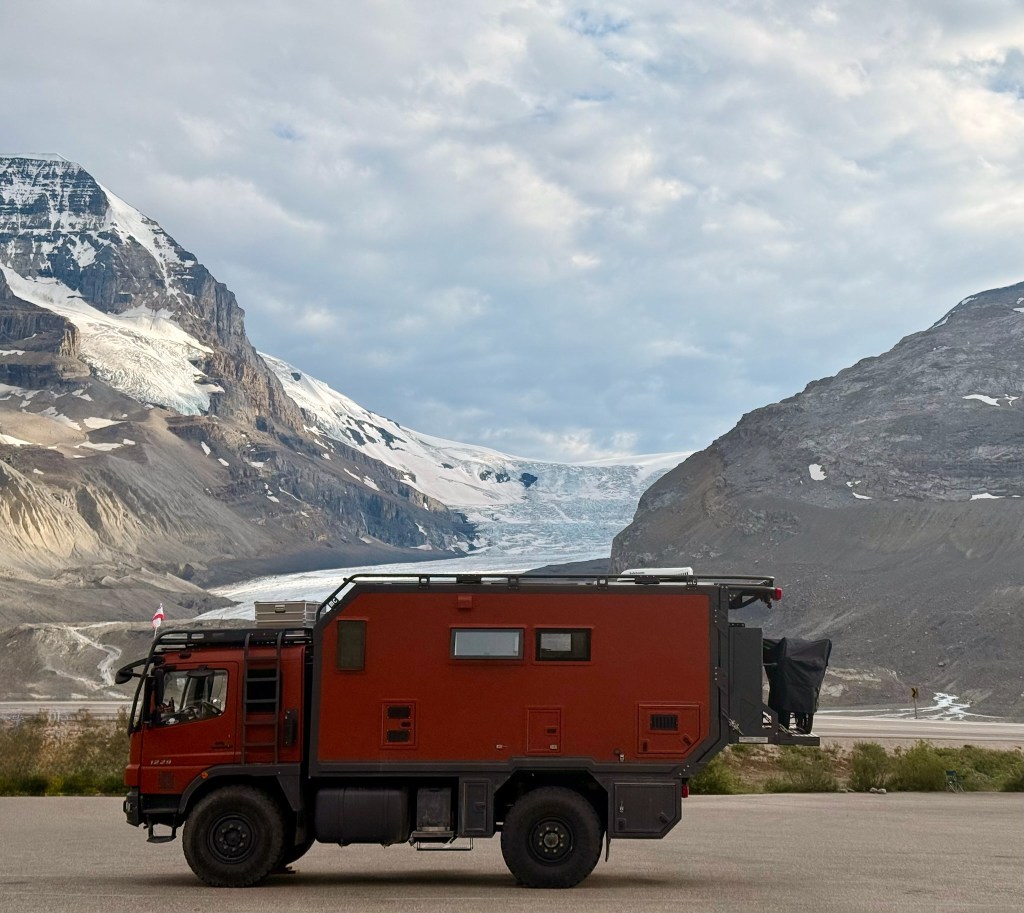
This is one of the major sights and tourist attraction along the scenic highway. Parking at Columbia Icefield was an interesting experience. There are huge parking lots and one is specifically for RV’s. Because it was so busy, it was full and there were many cars in there too. We saw a lot of American coach style RV’s along with their towing vehicles in there. They all had numbers on because they were part of an organised adventure tour, mmm, not sure what is adventurous about travelling in a large group with towed cars behind you. Because the car park was so busy, there was some interesting and less then courteous parking, and we had some entertainment watching people’s reactions to this! Nonetheless we had a great view of the icefield and glaciers, and easy access to the visitor centre and a walk that took you close to the Athabasca glacier. As you walk towards the glacier it is frightening to see the year markers which show how much the glacier has retreated, over 135 years here, 1.5 km, and it has lost over half its volume!

With binoculars we were able to watch giant all-terrain buses take tourists onto the icefield; this is probably the main reason this car park and visitor centre is so busy. After most of the vehicles went, we had a peaceful evening in this parking lot.
Banff’s lakes really are spectacular in colour and setting, but for me, they didn’t outshine the European Alps. Mark, however, disagrees — he thinks they’re every bit as breathtaking. We both agree, though, that the crowds make it hard to fully enjoy. Parking is a nightmare, boondocking isn’t allowed nearby, and most campgrounds are booked well in advance.
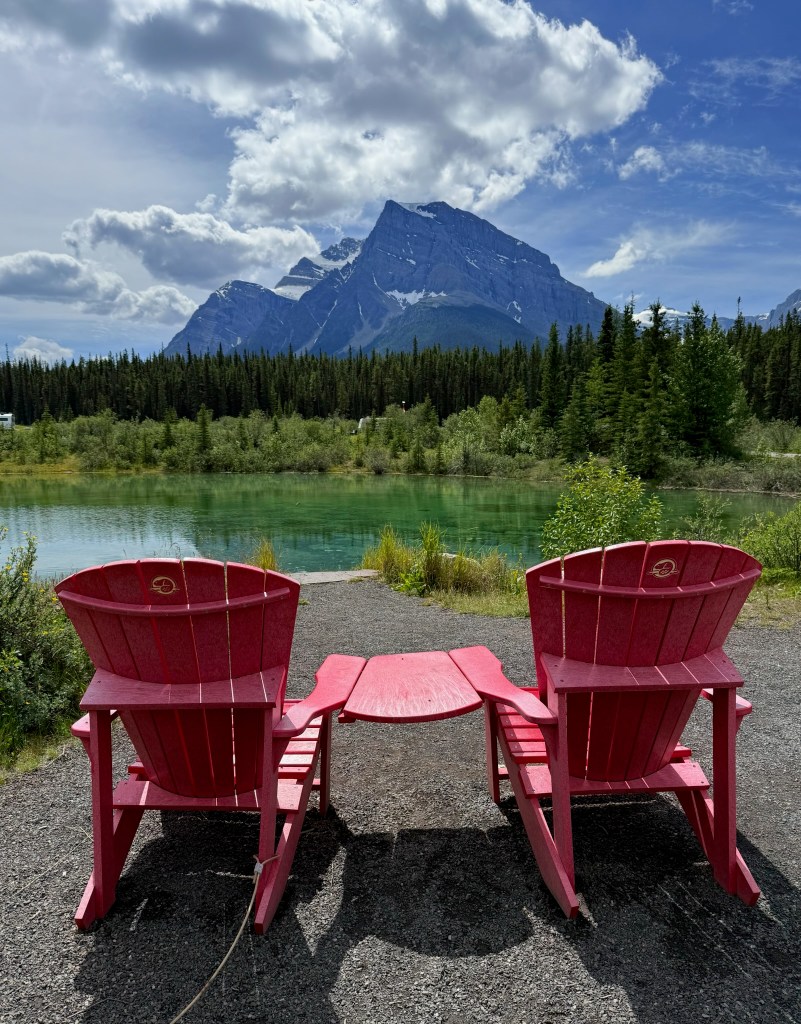
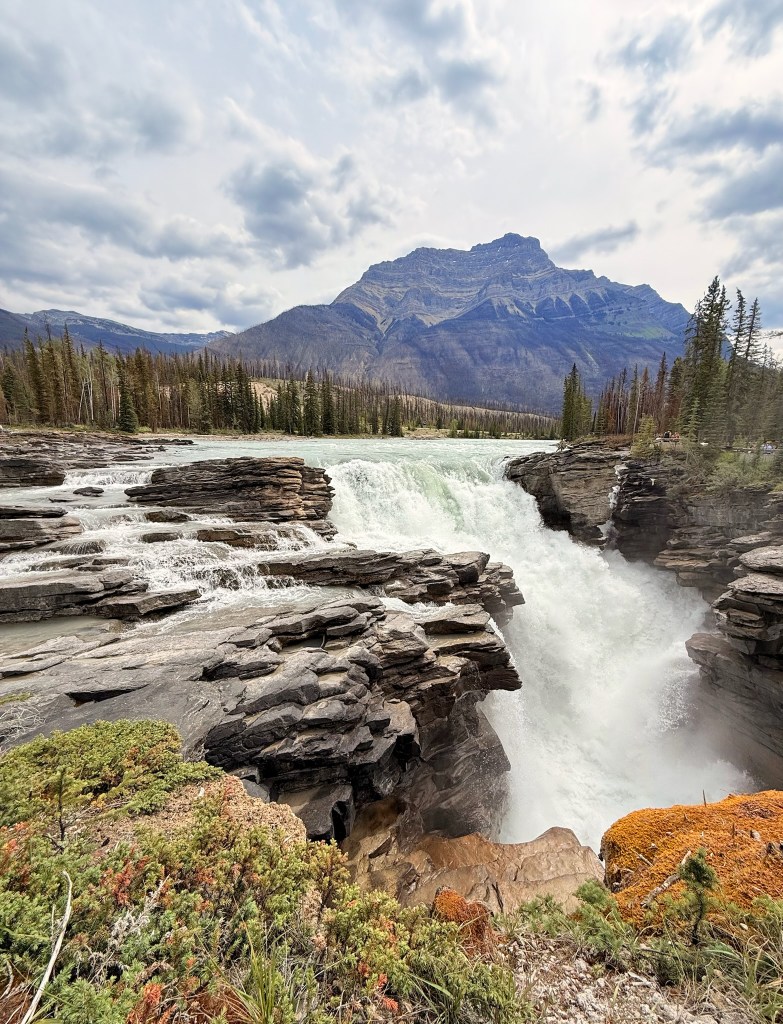
The drive from the Columbia Icefield to Jasper started with a wide glacial valley and easy roads. We soon saw signs of last year’s wildfires — blackened trees and scorched ground — though nature was already fighting back with flowers and grass. We stopped at Athabasca Falls which are powerful and beautiful.
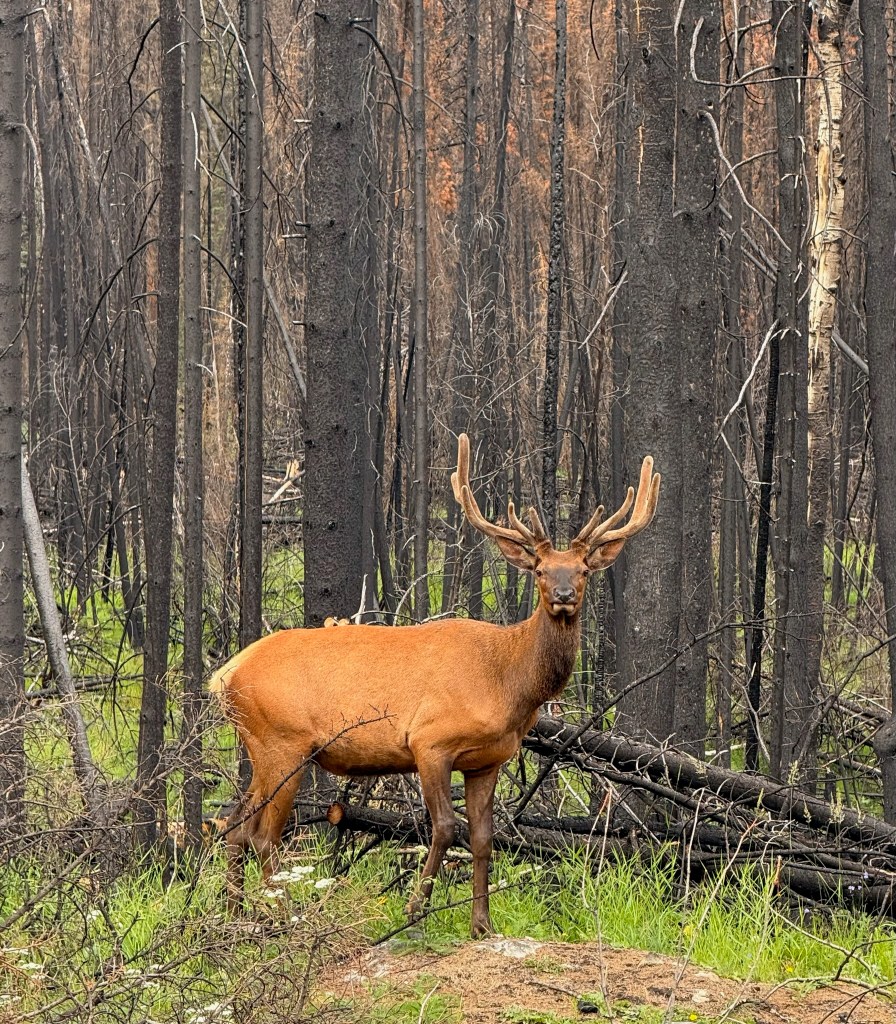
Not long after that, we joined a crowd of cars pulled over to watch two majestic elk in the woods right by the road. Later, we doubled back to a viewpoint we’d almost missed, catching a stunning view framed by both devastation and regrowth.
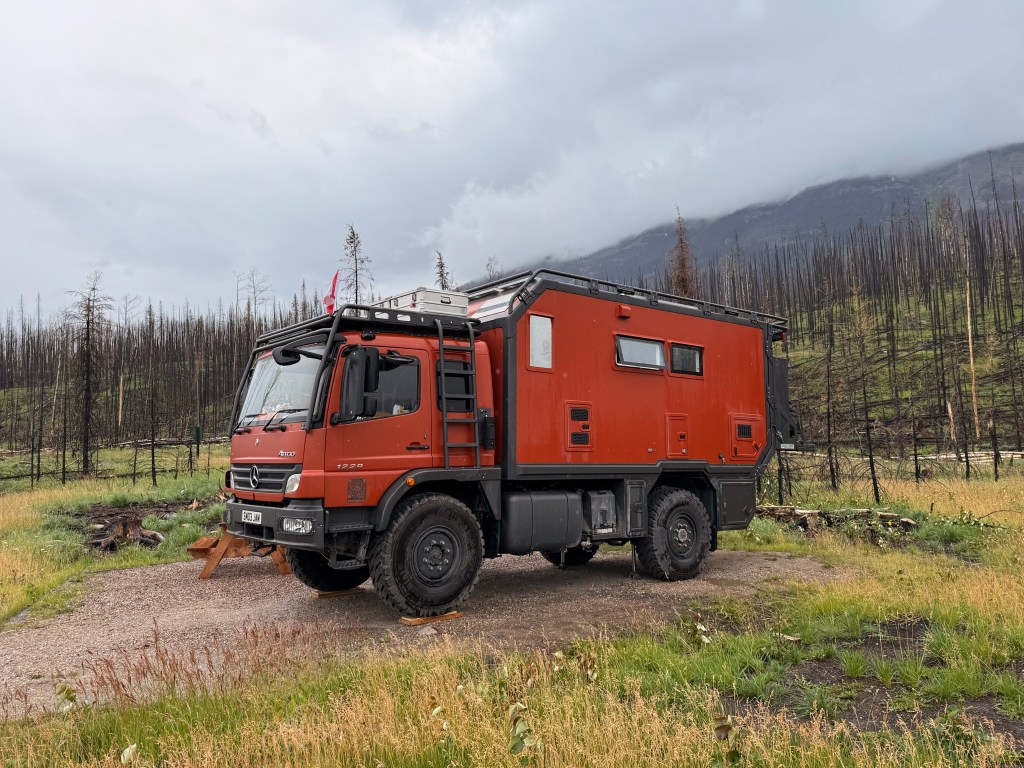
Jasper itself was surreal — temporary housing alongside homes untouched by the fire, with burned-out lots just across the street. The campground we stayed in had not long reopened after the fire and you could see that it would once have been a forested site, now just burnt stumps remained.
Maligne Lake and Fire’s Patchwork
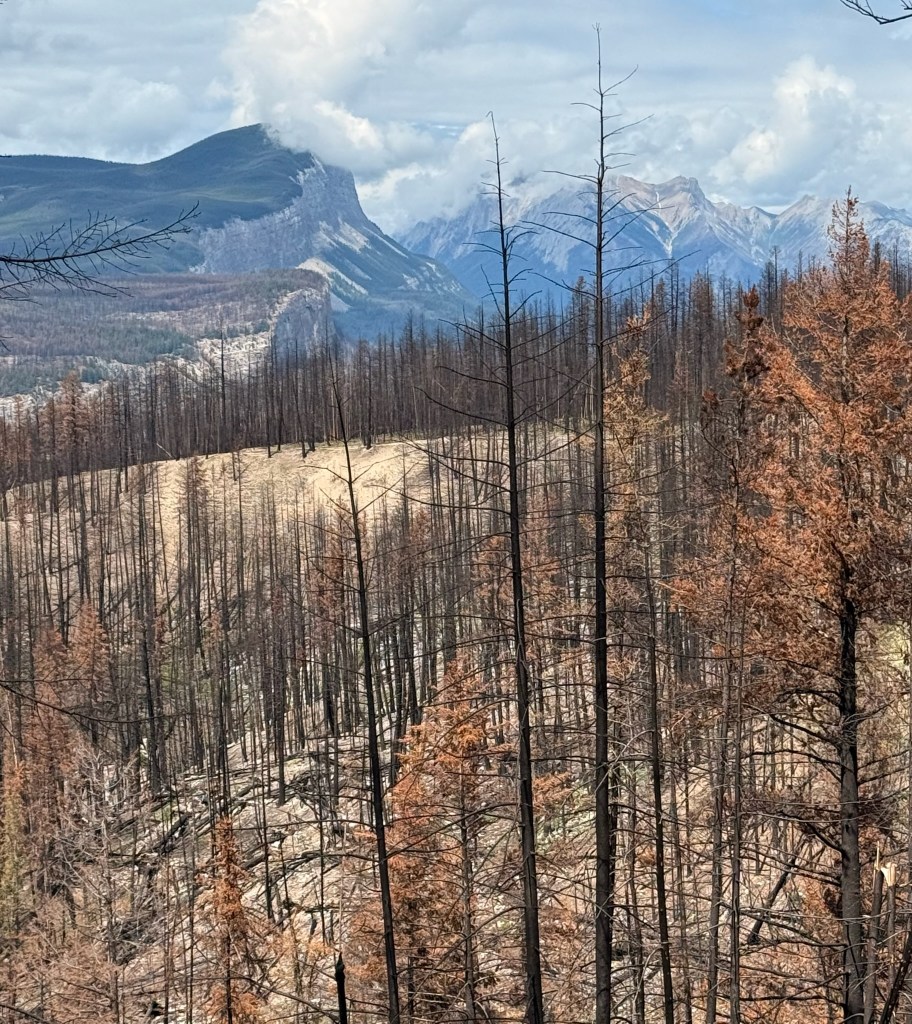
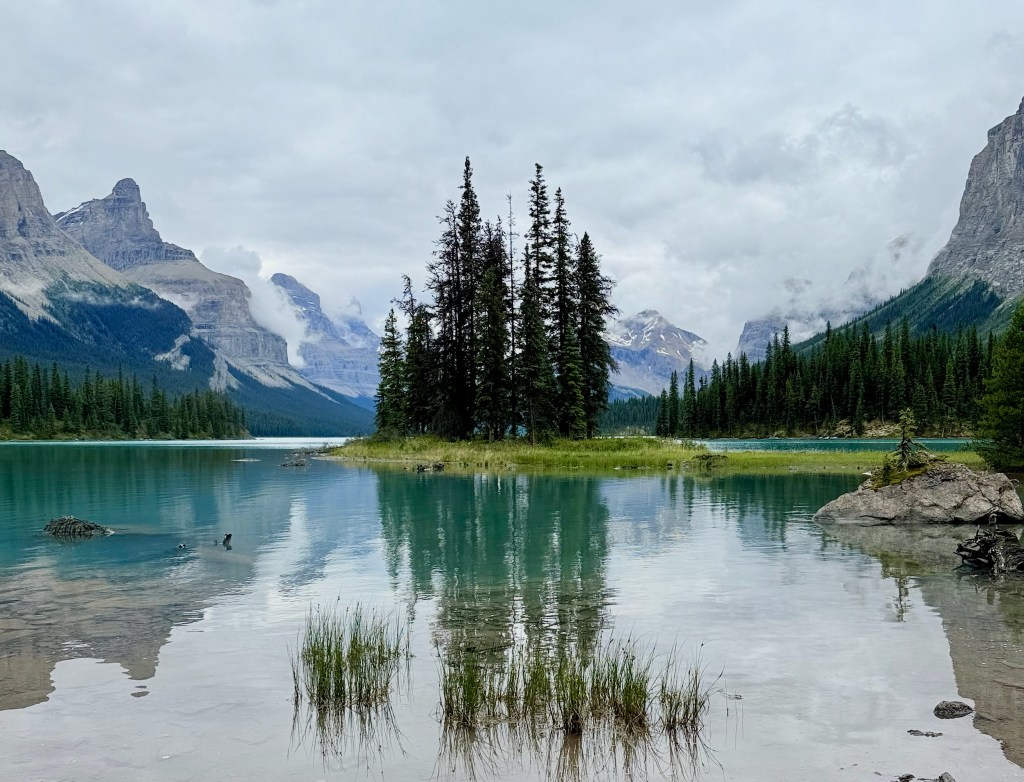
We wanted to visit Maligne Lake, the largest natural lake in the Canadian Rockies at almost 14 miles long, as it looks beautiful and has Spirit Island, one of the iconic sight of the Rockies. The road to Maligne Lake was a strange patchwork: stretches of lush greenery suddenly giving way to charred forest, then back again. It’s the worst fire damage we’ve seen so far, and yet nature is clearly piecing the puzzle back together.
When we got there it was overcast but easy to see why it is such an awe inspiring sight. To see Spirit Island we had booked ourselves on to a boat trip, the only way to see it. This was a nice trip along beautiful waters surrounded by big mountains which were mostly cloud covered, very atmospheric. Close to Spirit Island we got off the boat and had a short walk along the shore to all the view points. Whilst it is beautiful, it isn’t really an island, as there is a causeway that can be walked on to it. However, tourists aren’t allowed to do this, as it is a sacred place to First Nations people.
So another few places ticked off our bucket list, now we are ready to start the Alaskan Highway and reaching Alaska, but a few more bucket list places to tick off first, where will they be?…………..

 Happiest when exploring