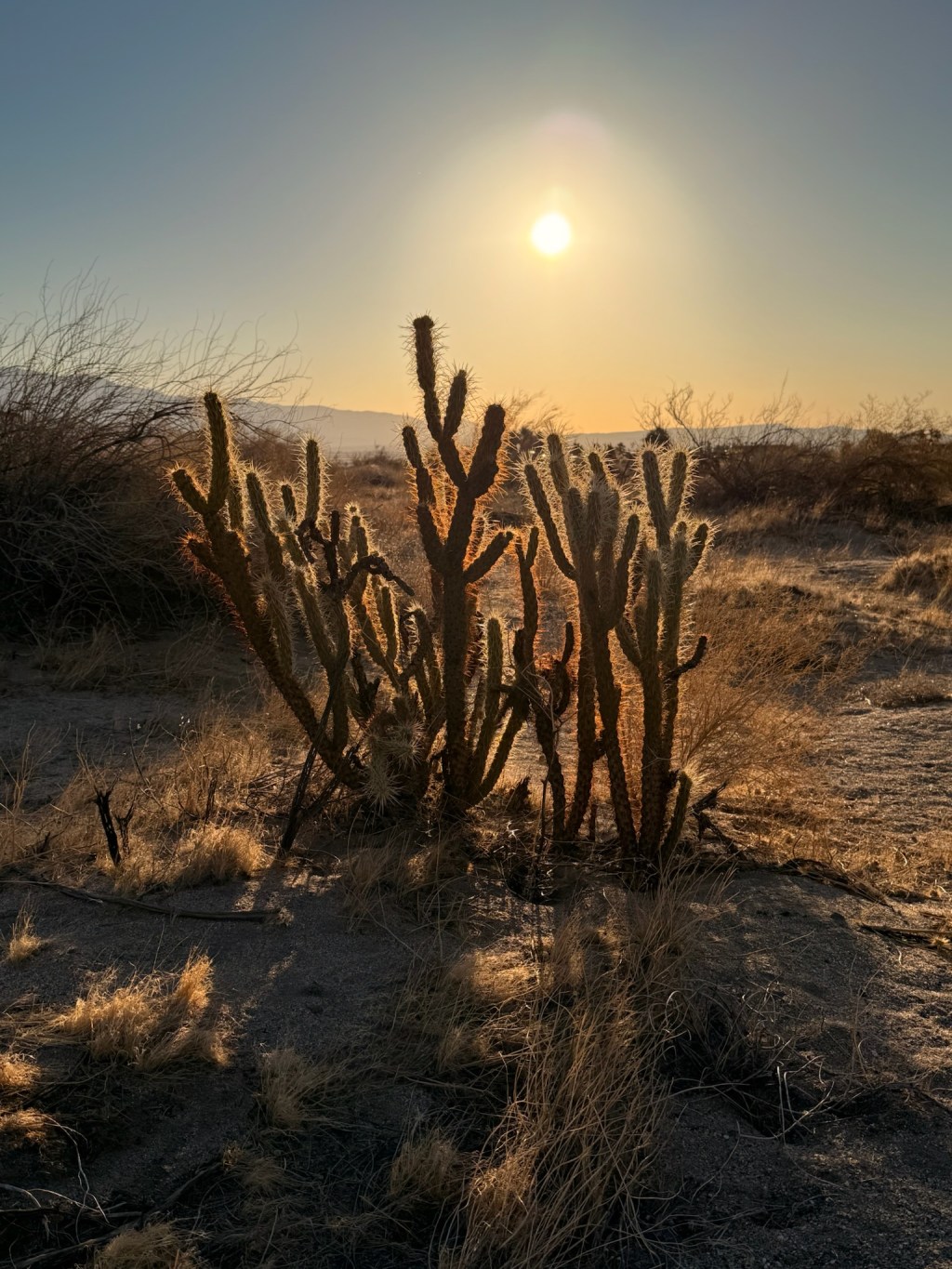
We left San Diego and made our way through the small mountain town of Julian—famous for its apple pies! Naturally, we couldn’t resist and picked one up to enjoy later.
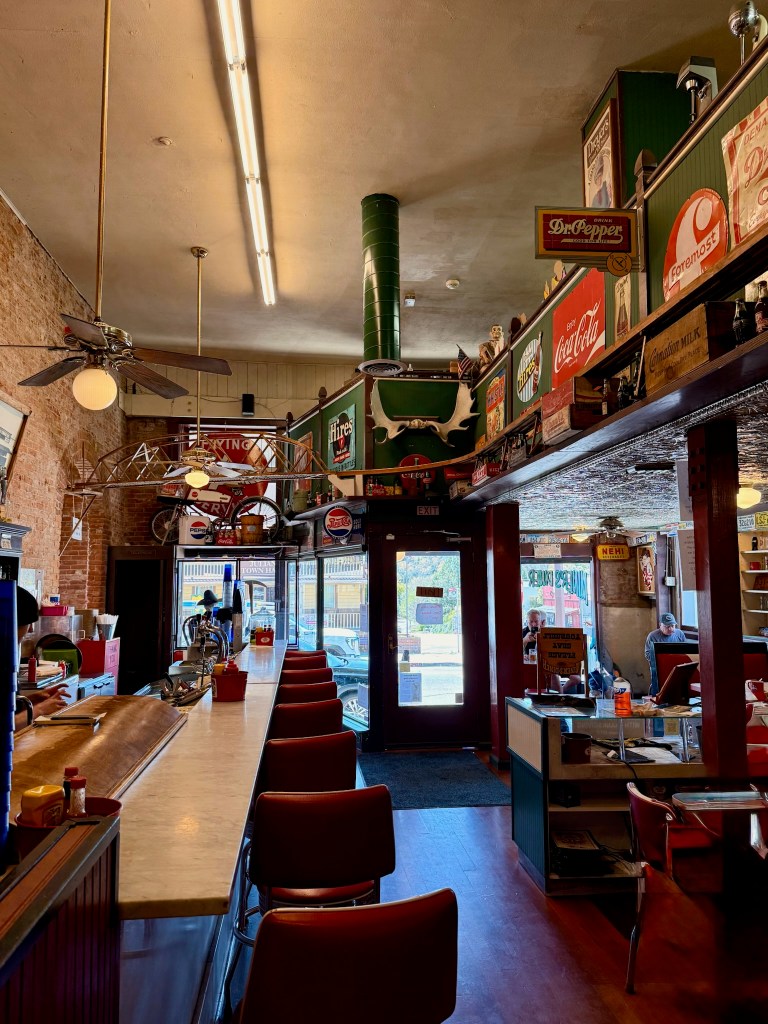
Julian reminded us a little of the towns back home, especially as there were daffodils on display in the verges and gardens. A key difference was the traditional American diner with a miniature railway circling the inside. I treated myself to a banana split for lunch—such a delicious indulgence.
As we continued on, the temperatures started rising as we entered Anza-Borrego Desert State Park. The campground we had originally booked turned out to have pitches too small for Shaun, so we drove on to another campground within the park, located on the edge of the small desert town of Borrego Springs. It turned out to be a great decision! The new site had electric hookups, which meant we could run our air conditioning nearly non-stop in the 40°C heat. The campground was quite busy, but we rarely saw anyone— most people were hiding inside their air-conditioned RVs!
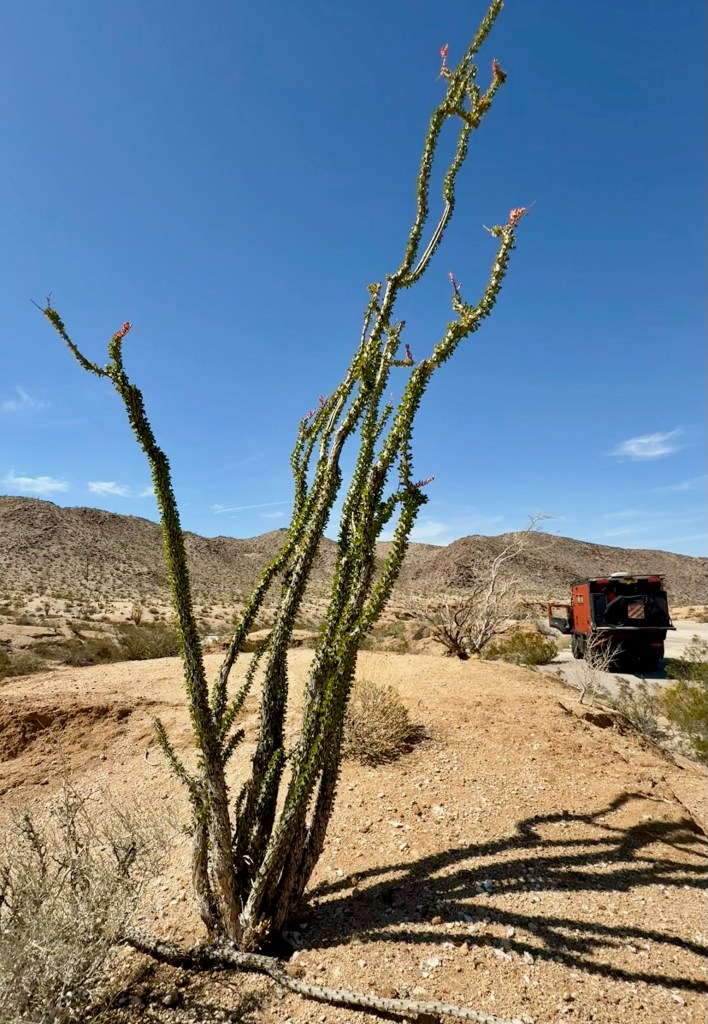
Due to the extreme heat, we had to adjust our schedule. A state park ranger advised us to do any walking or outdoor activities before 10 a.m., so early mornings became our new normal. Luckily, staying in Borrego Springs gave us great access to the area’s famous “Sky Art”—a collection of large metal sculptures scattered across the desert landscape. We took two morning bike rides to explore these spread-out installations and loved getting up close to admire the craftsmanship.
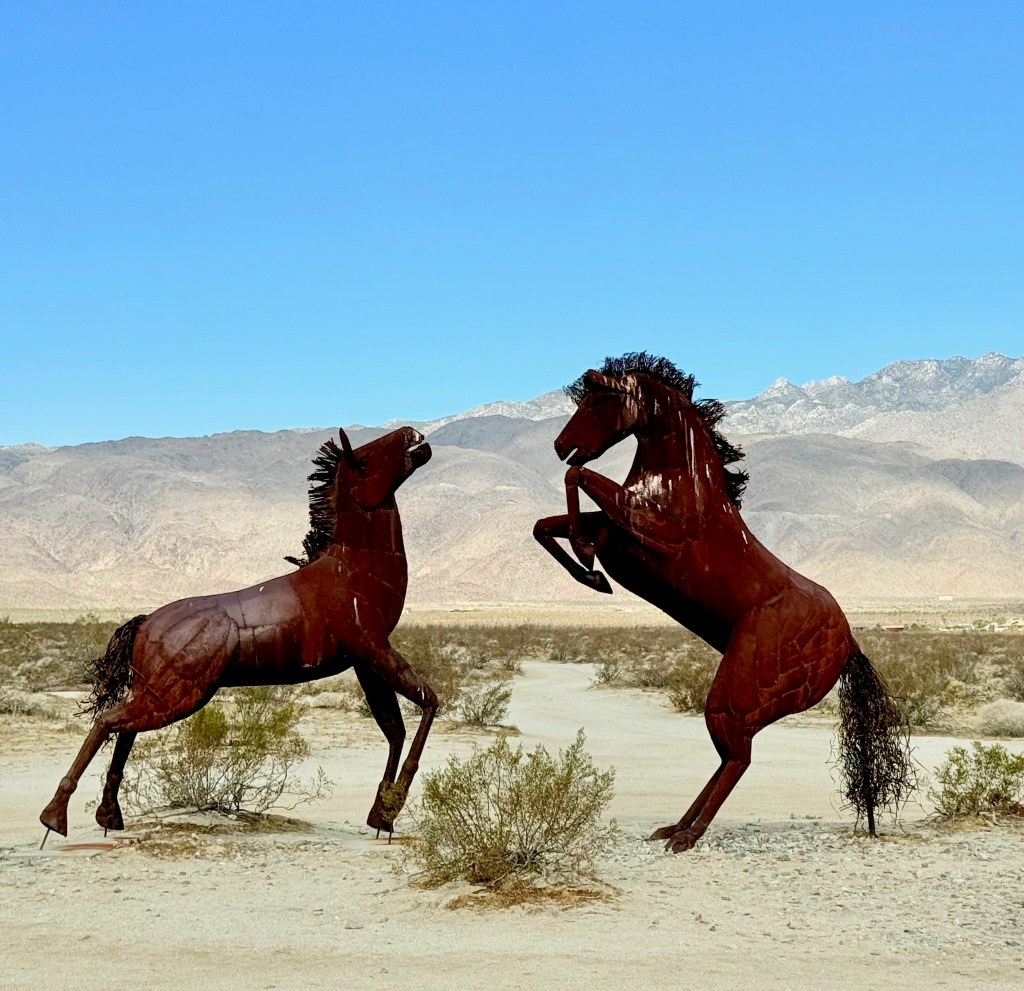
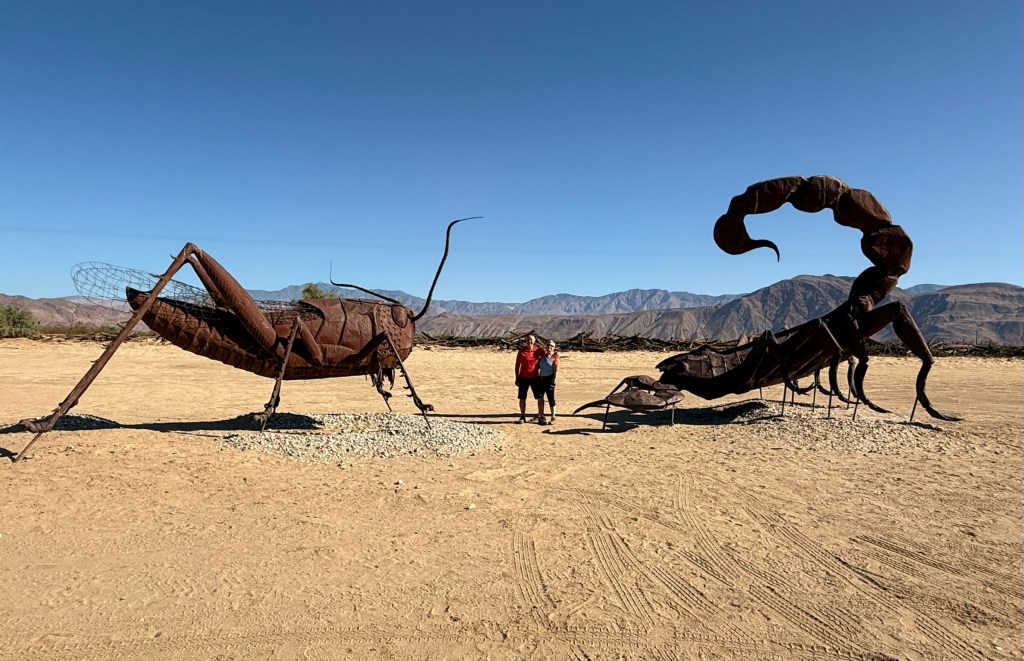
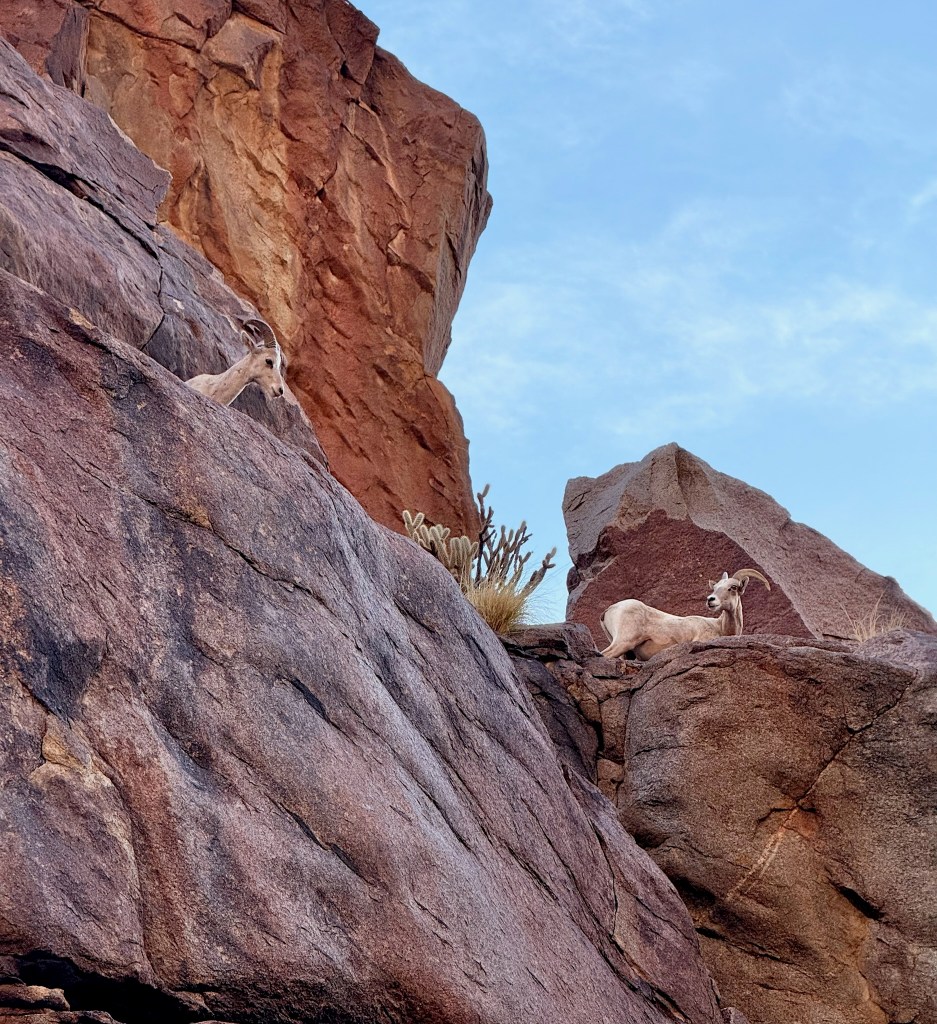
On our third morning, we did the Borrego Palm Canyon Trail, which led us to a desert oasis. We were lucky to see blooming desert wildflowers, hear the sound of running water (a rare and lovely treat), and spot some bighorn sheep among the California palm trees.
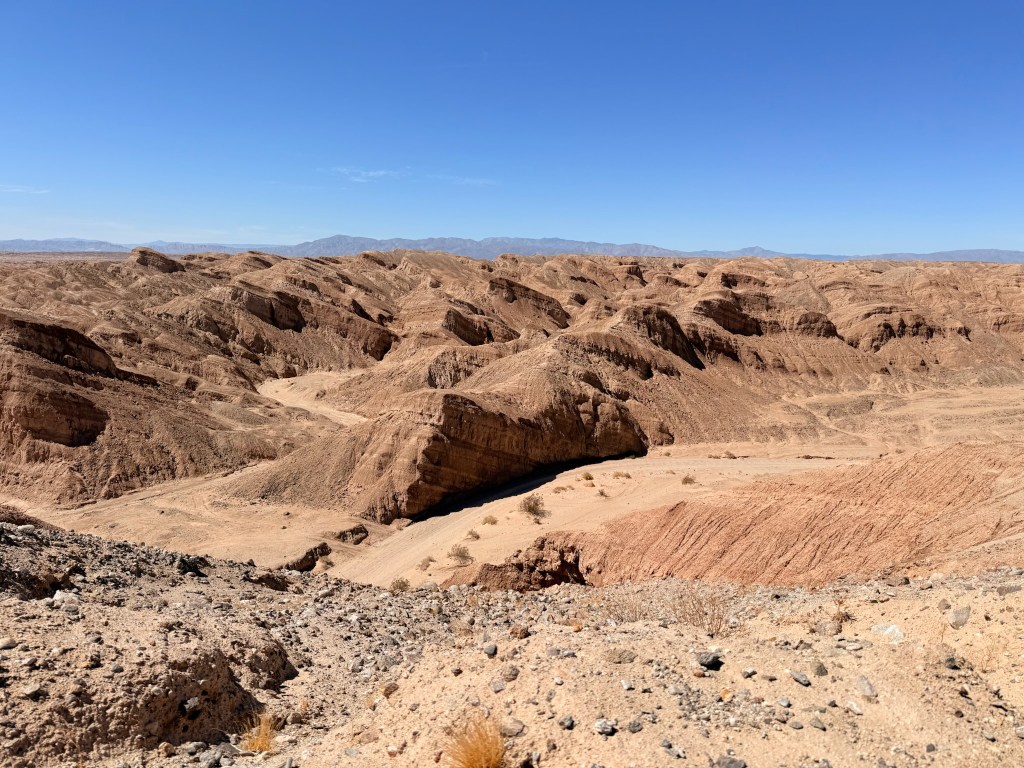
Next, we drove on to Joshua Tree National Park. The scenery along the way was fascinating—resembling miniature badlands, with beige and grey rocks, ravines, and canyons. We passed the Salton Sea, which—despite its name—is actually a lake, formed in 1906 when the Colorado River breached its irrigation channels. Once a bustling resort area, it’s now mostly abandoned and ghostly.
Our first stop in Joshua Tree was the Black Rock Canyon Campground, located in the southern part of the park. Surprisingly, we didn’t see any Joshua trees there, but there were plenty of other types of cacti. We hiked through great rock formations with great views of the surrounding desert.
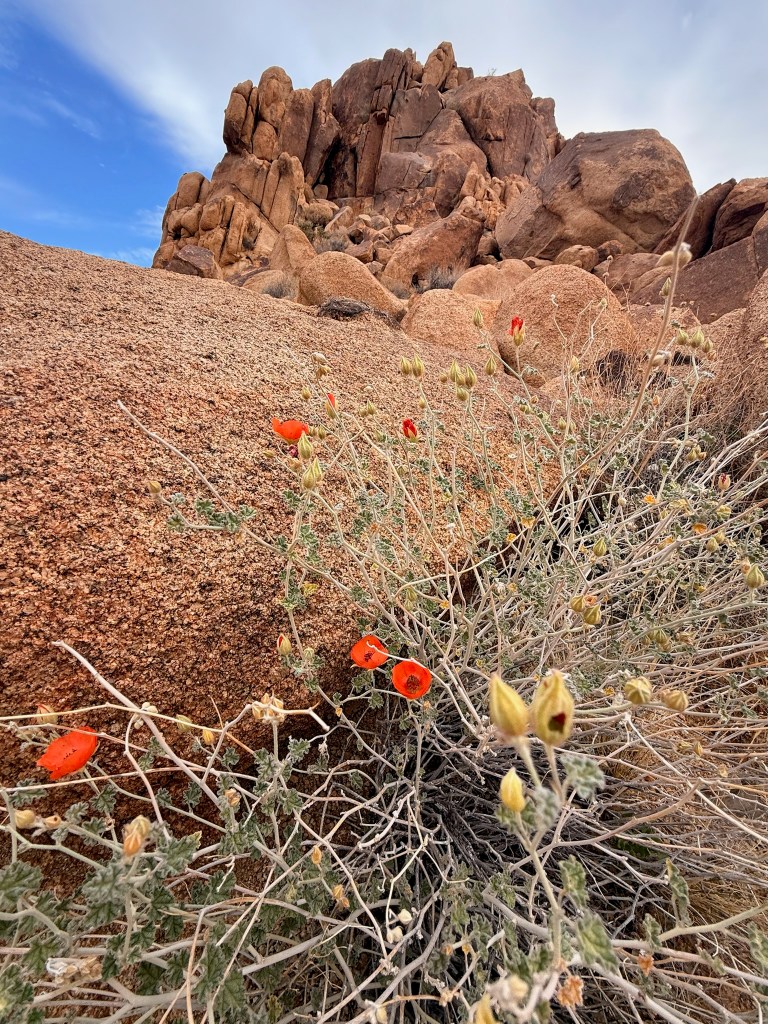
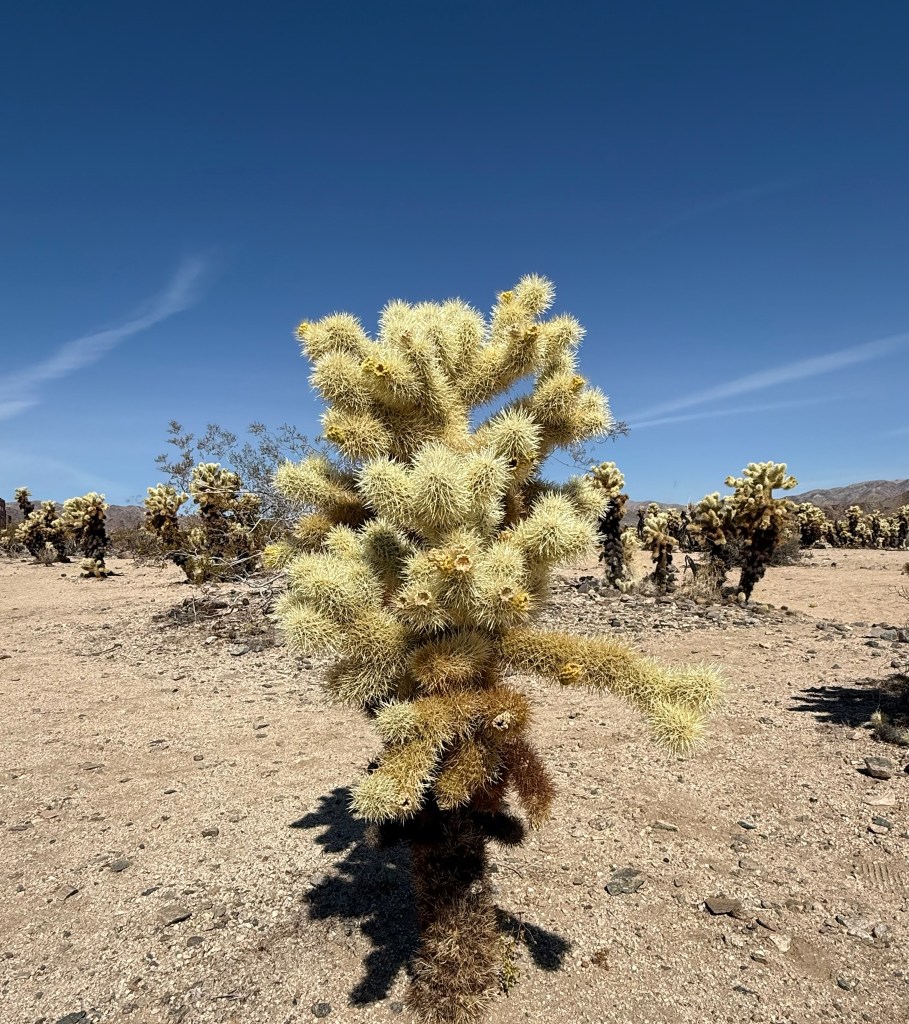
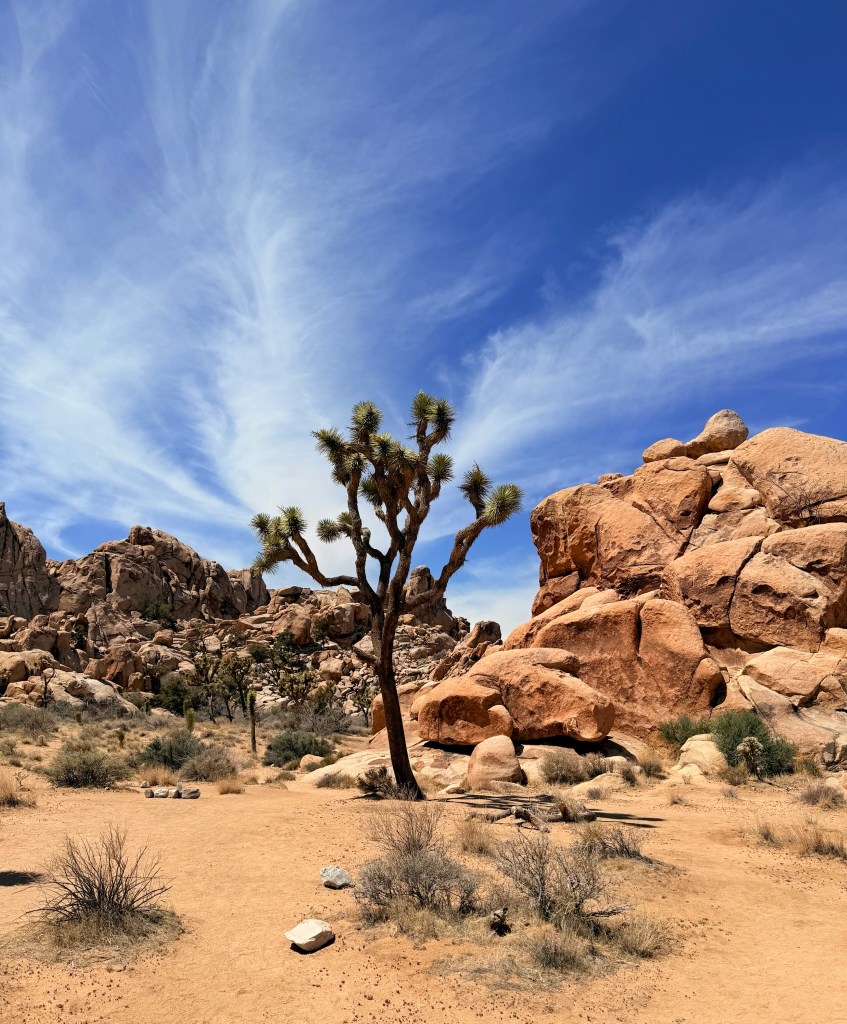
We then headed to Hole-in-the-Wall Campground, passing through the stunning Cholla Cactus Garden along the way. As we got deeper into the park, we finally started to see Joshua trees—lots of them—along with more incredible rock formations. Honestly, the rocks in Joshua Tree are just as captivating as the trees themselves.
We attempted to drive to the start of a hike that sounded interesting, but had to reverse nearly two miles when we encountered a low-hanging Joshua tree—Shaun was too tall to pass under it, and cutting it was out of the question! During one of our hikes, we met a lovely couple who told us they were getting married in the park the next day—just the two of them, a celebrant, and a photographer. What a magical place for a wedding!
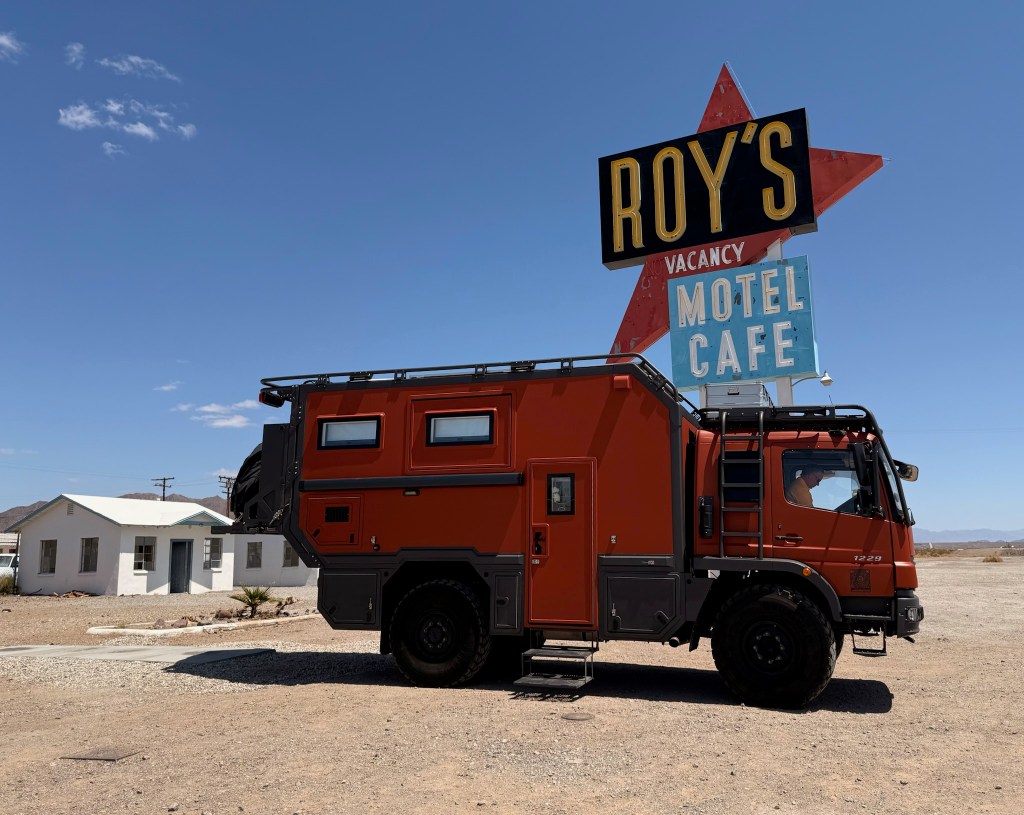
After a few days in Joshua Tree, we continued our journey into the Mojave National Preserve. Our route took us through yet more diverse landscapes, from a white looking region, where a lot of the USA’s salt comes from, to a black crater looming in the distance, lava black rocks! We drove through the almost ghost town of Amboy; it used to be an important staging post in the 19 Century, and Route 66 went through it. It has a preserved 1950’s motel and diner, so it was a great little pitstop.
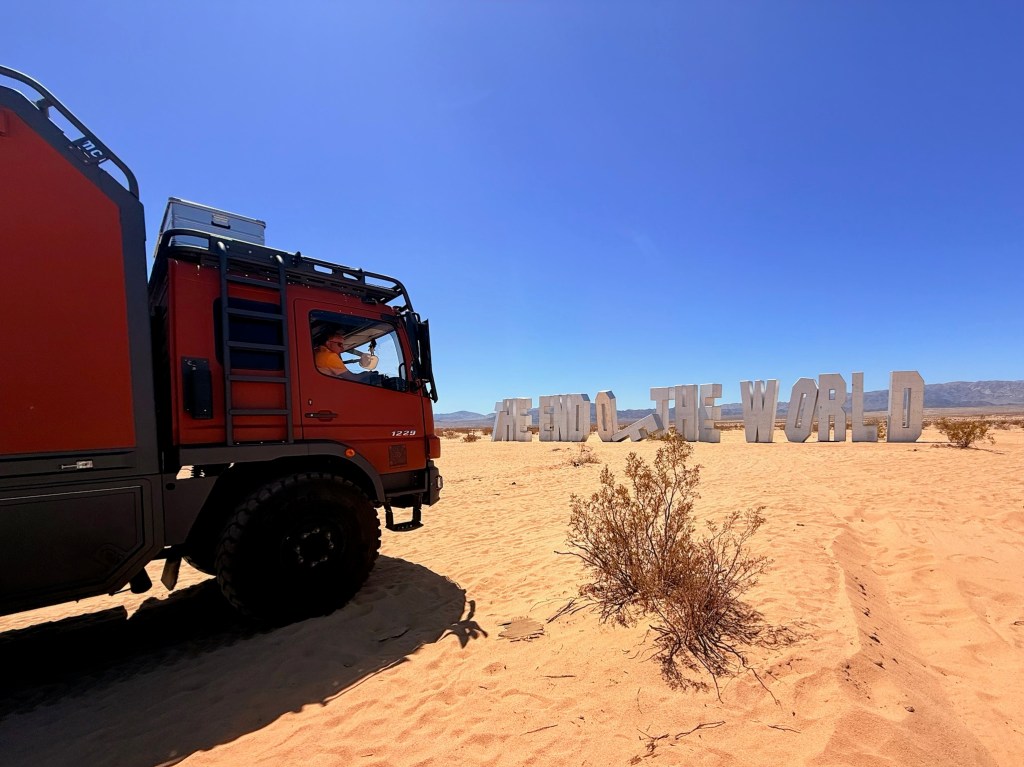
We also drove past a very cool outdoor sculpture, and just had to get a photo of Shaun by it:-
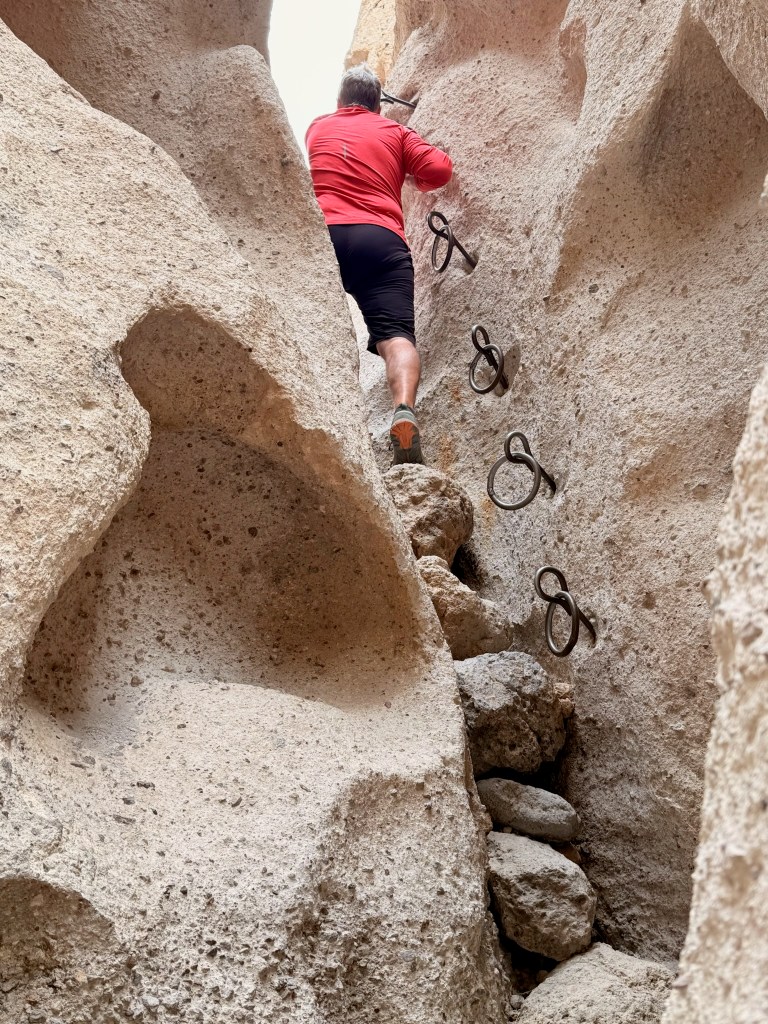
Our campsite in the Mojave National Preserve was peaceful and had a beautiful trail starting right from the door. We did the Barber Peak Loop Trail, which took us through a landscape dotted with colourful barrel cacti and many varieties of cholla (we didn’t even know “cholla” was a type of cactus before this trip!). The trail ended with a fun scramble through a small canyon, complete with iron footholds.
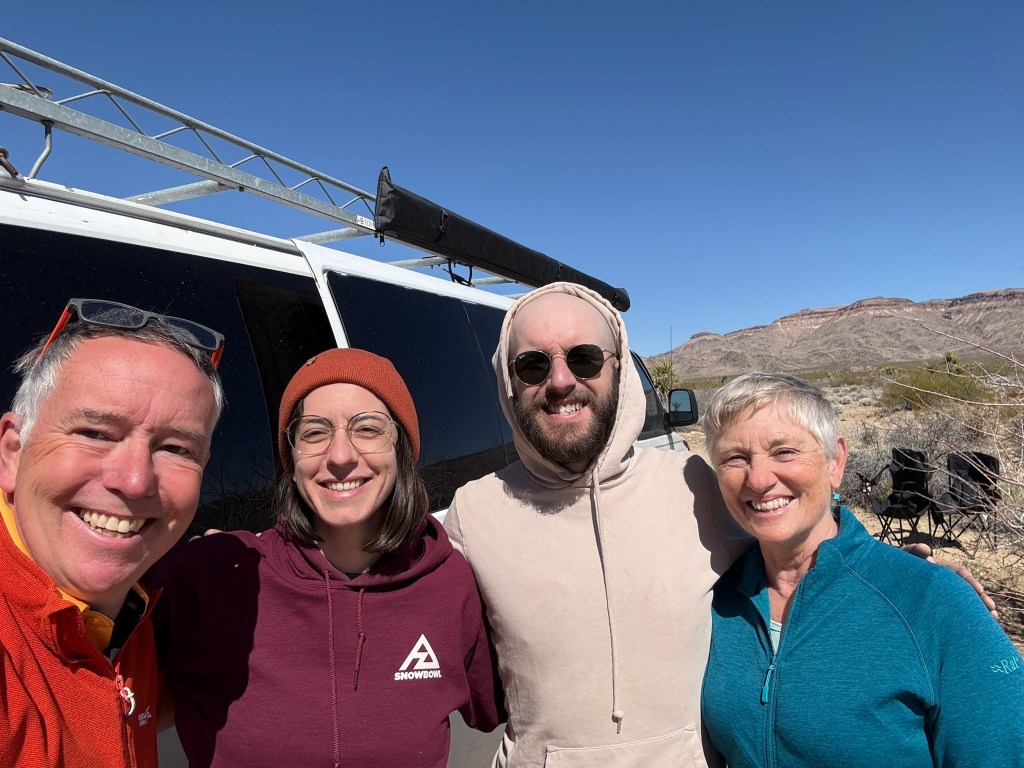
The next day, as we drove down toward the interstate, we saw someone waving from the side of the road. We stopped and reversed back to find a couple whose van had become stuck in the deep sand the night before. They’d tried to wave down passing cars, but we were the first to stop. It was the perfect opportunity to test out our sand ladders—and they worked! Mark helped the young man free the van while I chatted with the woman. They were a French-Australian-American couple traveling for a few months before moving abroad. They were thrilled to meet Shaun, and we were happy to lend a hand and wish them well on their journey.
Then it was on to Las Vegas. We had mixed feelings about going—we weren’t sure if we would like it, but we wanted to experience it at least once. We “boondocked” on someone’s driveway (with permission), although they weren’t home.
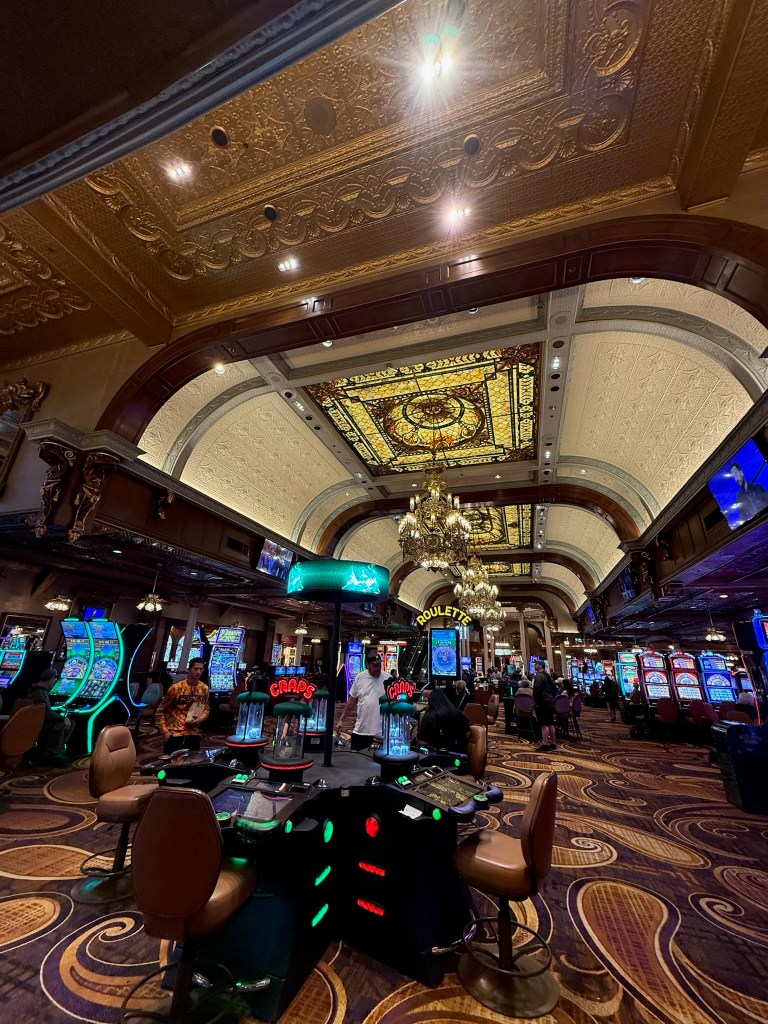
Our first stop was the old part of Las Vegas—Fremont Street. We stepped into a historic casino, Main Street Station, dating back to 1906. It had some antique furnishings and charm, but we were surprised to see it already buzzing with people playing the slot machines and smoking indoors—something we’re not used to anymore. The slot machines were enormous, noisy, and bright. It was a sensory overload, with people from all walks of life drifting through. We had a drink at a lovely marble-topped bar—though even the bar had built-in slot machines!
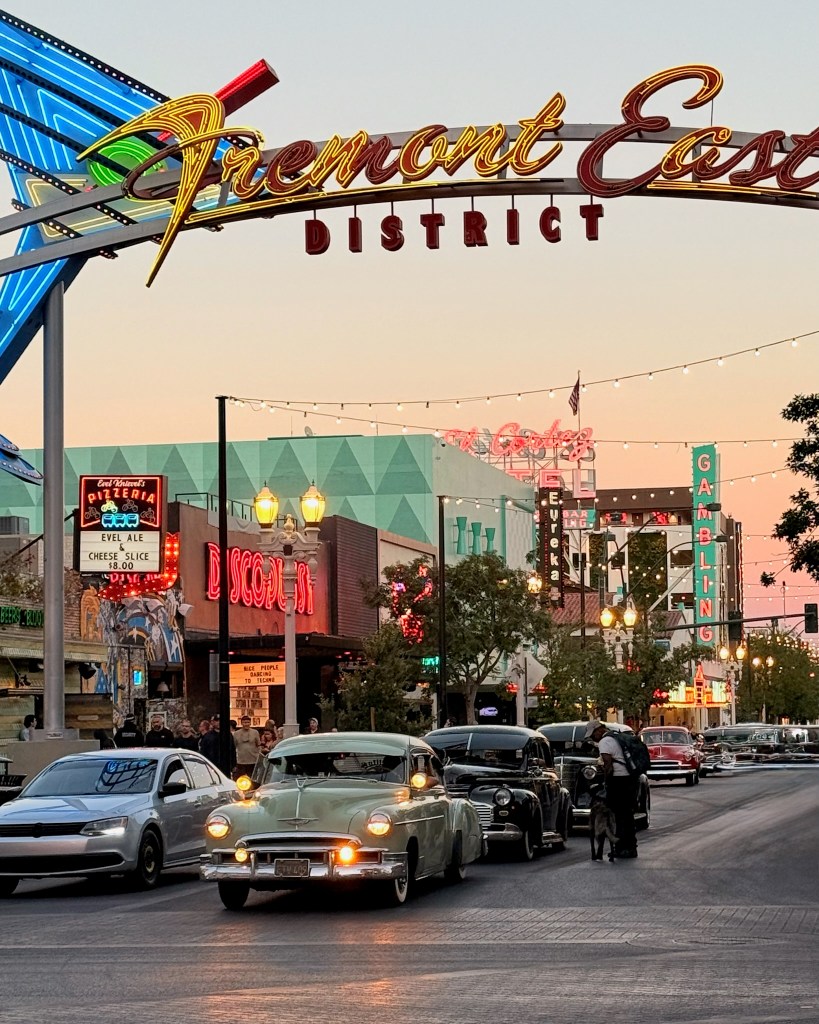
Then we entered the Fremont Street Experience, a covered mall with a huge digital ceiling showing light displays. People were zip-lining overhead, music was blasting from every direction, and girls were dancing on bar tops. The staff looked disinterested, and the overall vibe was more sad than exciting. We did walk past some of the older casinos still left in that area, and saw some cool vintage cars cruising past. There were some great neon signs too.
From there, we took an Uber to the Strip. We arrived just as night fell and got to see the Bellagio fountains come to life—genuinely impressive. We had a surprisingly good meal and ventured inside the Bellagio itself. Despite its luxurious entrance, the interior felt like any other casino—loud, crowded, and filled with people glued to slot machines. There was, however, a beautiful indoor garden with floral displays shaped into sculptures, which we really enjoyed. We splurged on a $25 cocktail each at one of the fancy bars and ended up chatting with a couple from Dublin who now live in Berlin. We have met a lot of Irish people on our travels, more than any of our home nations. They were in Las Vegas to attend a friend’s wedding, at, yes, you guessed, it a Chapel of Love. That bar, with its view of the fountains and a piano player performing, had a bit more class than the rest of what we’d seen.
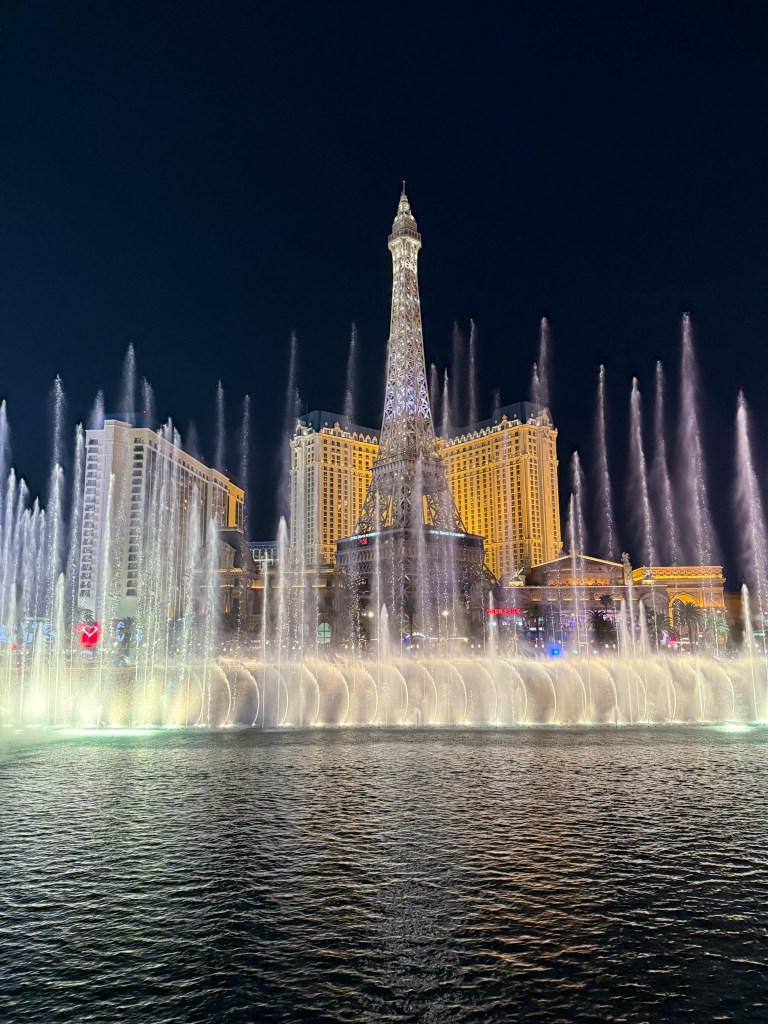
After watching two more spectacular fountain shows, we caught a bus back to Fremont Street hoping to see some Elvis impersonators—but none were around. Instead, we caught the tail end of a girl band’s performance and called it a night.
Las Vegas wasn’t for us. It felt overwhelming, loud, and a bit sad. Maybe if we’d booked a show or gone all-out, we would’ve had a different experience—but we were happy to tick the box and move on. Vegas: one night only!
After leaving Las Vegas, we drove about 30 miles to Boulder Beach Campground, a convenient base for visiting the Hoover Dam. This is a lovely campground just six miles from the dam—perfect for a bike ride, especially with our e-bikes to help with the hills and heat.
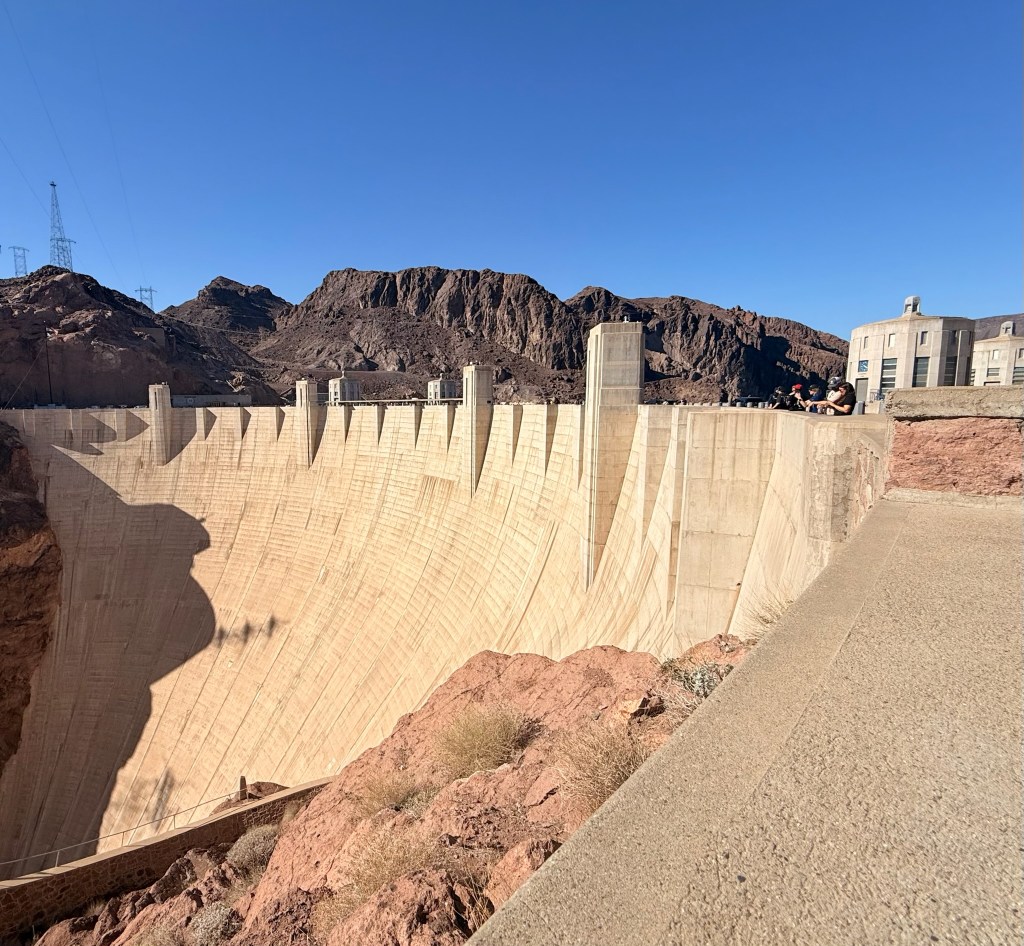
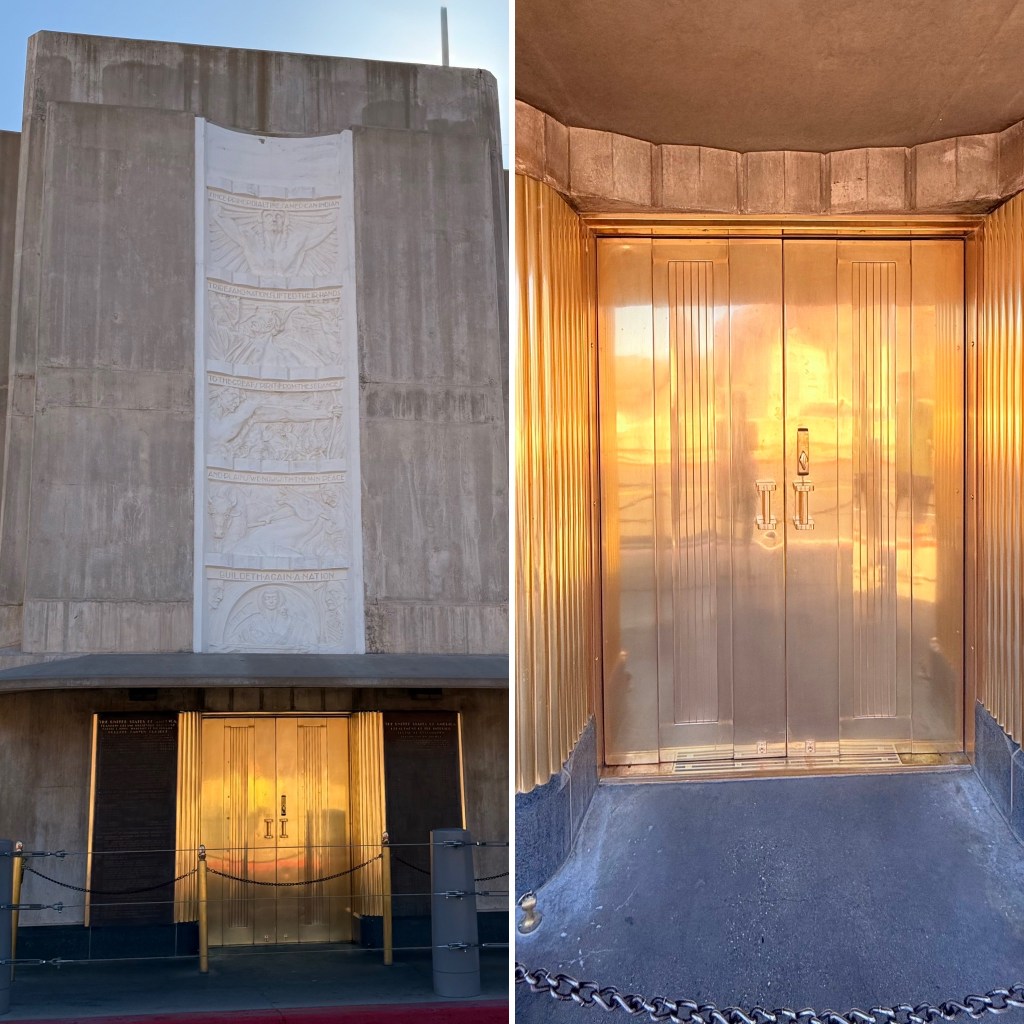
Visiting the Hoover Dam was every bit as awe-inspiring as we expected. It’s an incredible feat of engineering—especially considering it was completed in 1935, two years ahead of schedule and under budget. Sadly, 98 men lost their lives during its construction, some due to heat exhaustion. It was hot when we visited, and we couldn’t imagine working in those conditions. Because it was built in the 1930s, it features beautiful Art Deco-style details, which we both really liked.
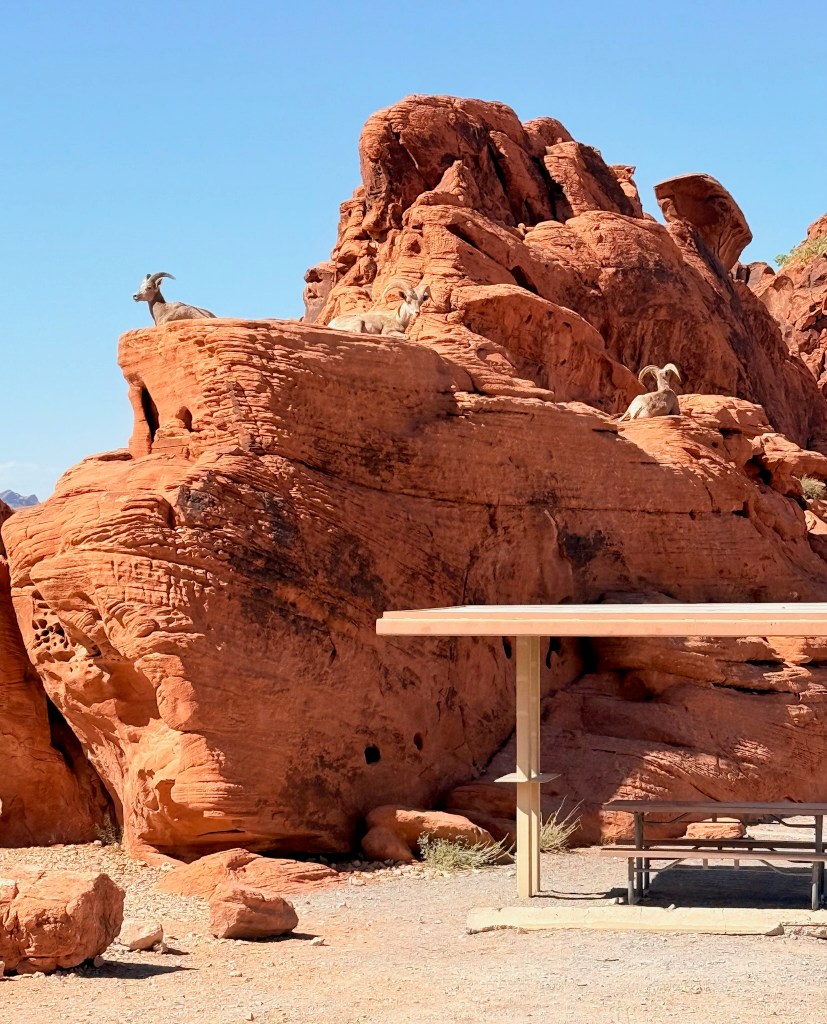
From Boulder Beach, we headed to Valley of Fire State Park. Being spring break, the park was busy—we queued for about 40 minutes to get in. The stunning red rock formations (which must be the reason for the park’s fiery name) made it worth the wait.
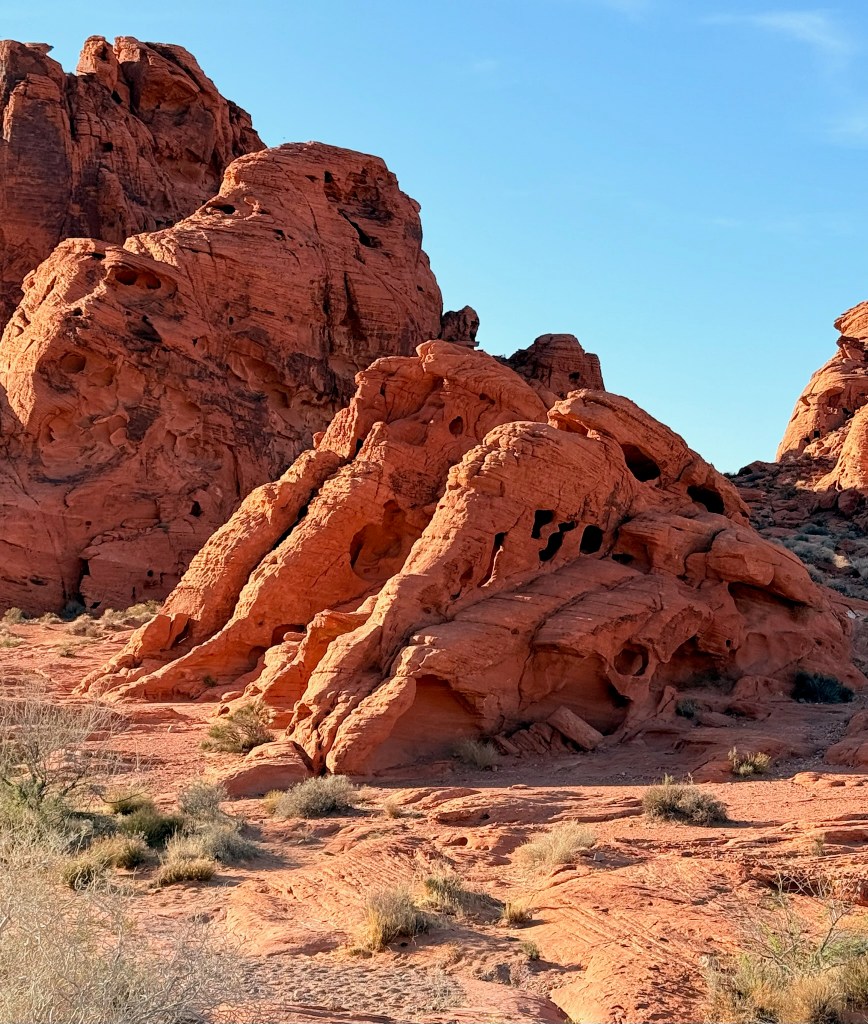
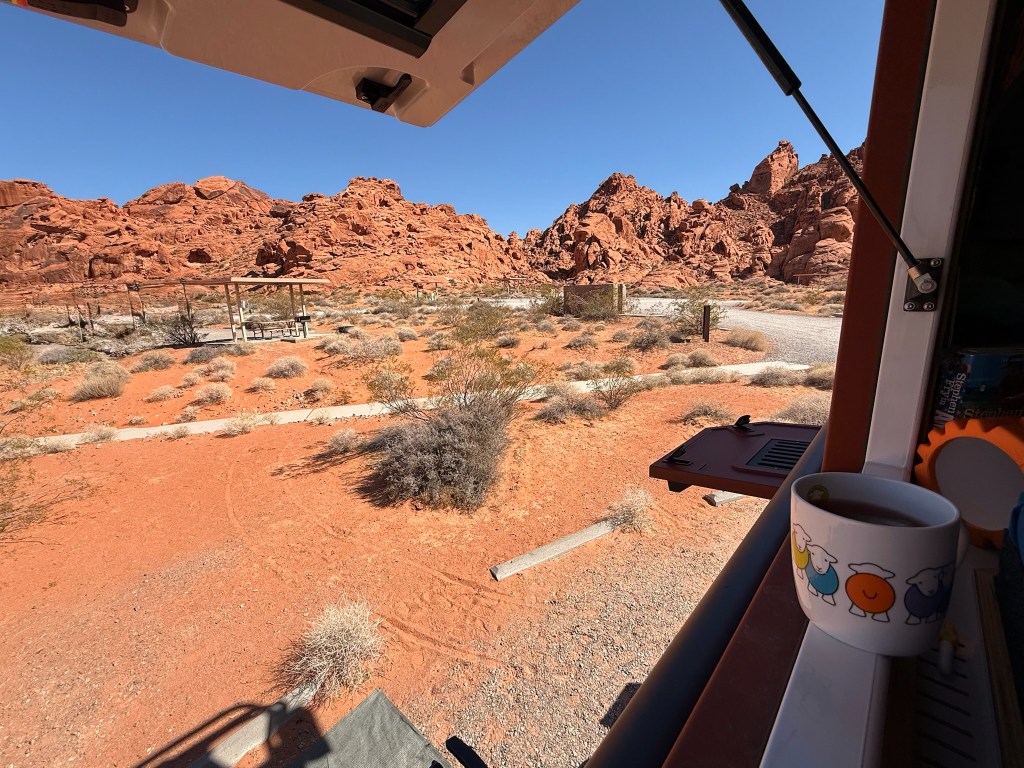
We hadn’t managed to book a site inside the park ahead of time, but we stopped at the visitor centre and were told there might be one unoccupied pitch left. We rushed the four miles to the campground and were thrilled to find it free! The campground, nestled among dramatic red sandstone formations, was absolutely beautiful. We parked Shaun on the spot, then cycled back to the visitor centre to pay the $10 fee. The site even had electricity, so we happily turned on the air conditioning right away.
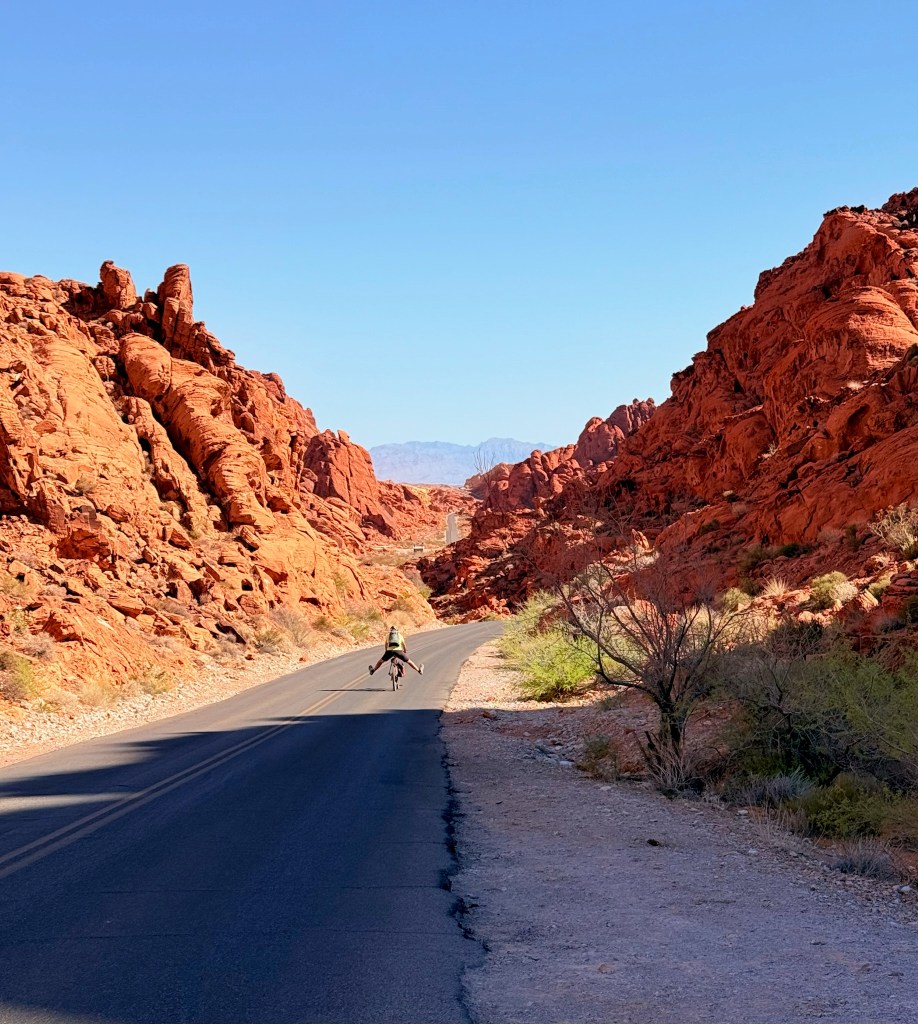
The next morning, we hopped back on the bikes, secured our site for a second night, and then cycled to the trailhead of a hike we’d planned. The ride itself was spectacular—we didn’t see any other cyclists about, which was a shame, because it’s such a great way to experience the scenery up close.
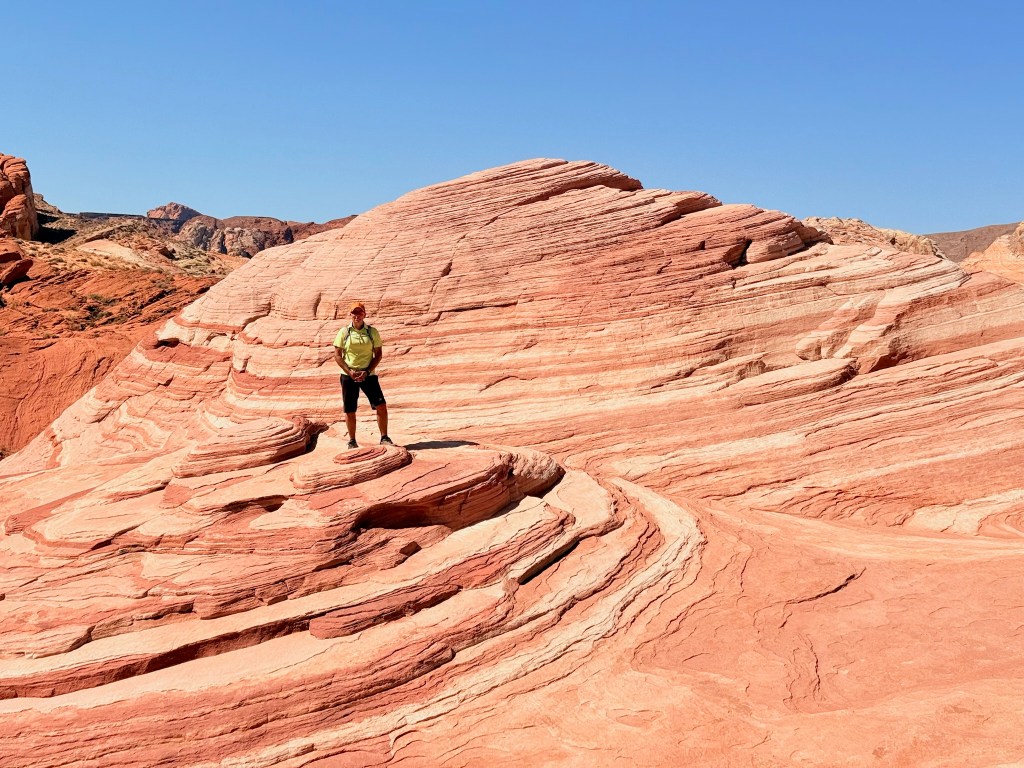
Our hike was about 3.5 miles and passed through some incredible geological features. In parts, we barely saw another soul; other sections, like White Domes, were much busier. After the hike, we found shade under a large rock, sipped chilled Ribena, and snacked on salty nuts to replenish what we’d lost in sweat.
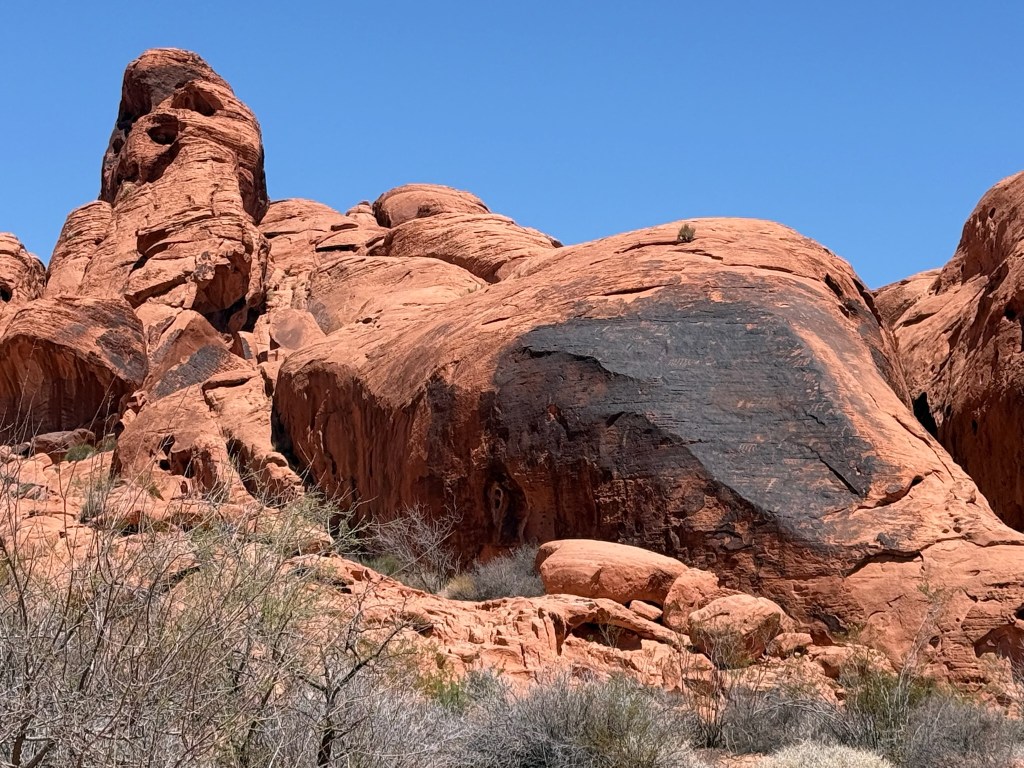
Later, we did the Mouse’s Tank hike, which felt like walking through an open-air gallery of ancient rock art. Petroglyphs were etched into the black desert varnish on red sandstone—it was fascinating and well worth braving the heat for.
After that, we treated ourselves to an ice cream at the visitor centre before heading back to Shaun, which was blissfully cool thanks to the running air con. We spent the afternoon relaxing and enjoying the peaceful desert surroundings.
But, enough of Nevada, the Outdoor Adventure Capital, Utah is calling, and we are excited to be going to see ‘The Mighty Five’ five renowned national Parks……


 Happiest when exploring